
Company Profile
About XNJTG
Powering innovation, powering the future
Since 2010, XNJTG has been at the forefront of battery innovation, providing reliable and efficient power solutions to customers around the world. Our mission is to power innovation and drive progress, and we are dedicated to creating a future that is powered by clean energy.

Our story
Innovation Driving Progress Since 2010
Our values
Responsibility, Sharing, Initiative
At XNJTG, our commitment to responsibility and sharing drives us to create reliable and efficient power solutions that power progress and drive innovation forward.

Responsibility
Can develop abilities that weren't yours.

Sharing
Can bring you resources that weren't originally yours.

Initiative
Can lead to opportunities that originally didn't belong to you.
R&D team
Leading with Vision, Driving Results
XNJTG is dedicated to developing advanced lithium-ion battery technology that provides reliable and efficient power, while reducing environmental impact. Join us in driving progress and shaping a greener future.

Wenquan Chen
Chief EngineerThe Chief Engineer has over 20 years of experience in product development, programming, and debugging of microcontrollers, DSPs, ARMs, FPGAs, and a focus on integrated circuit and energy storage battery technologies

Haoyu Huang
Electronic Hardware EngineerHe is an electronic hardware engineer responsible for
designing hardware solutions for the company's iterative products and optimizing existing products

Zeou Zuo
Power EngineerHe is a power engineer responsible for the design and development of software and hardware for various sizes of power chargers, organizing product technical reviews, and carrying out technical status management;

Shiding Wang
Hardware EngineerHe is a hardware engineer at ChipTech, mainly responsible for small-scale testing and validation of new products, saving test sample parameters, determining product release versions, and tracking product anomalies

Kelian Zhou
Software EngineerHe is a software engineer who is primarily responsible for writing aging test software for electronic products and is proficient in the Python programming language

Wenbing Liu
Software EngineerHe is a software engineer, responsible for upgrading and developing smart manufacturing software in the factory
WHY XNJTG
Where innovation meets precision
- Customer Supreme
- Quality Paramount
- Embrace Innovation, Strive for Excellence
- Strive for Excellence

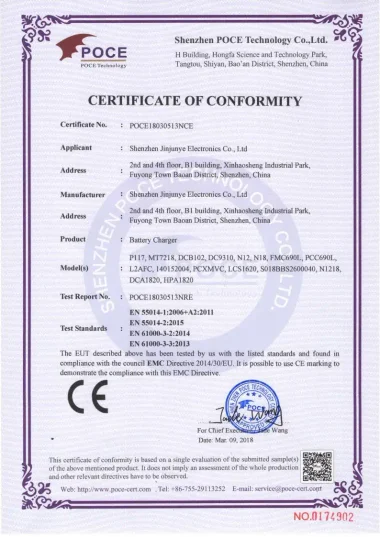
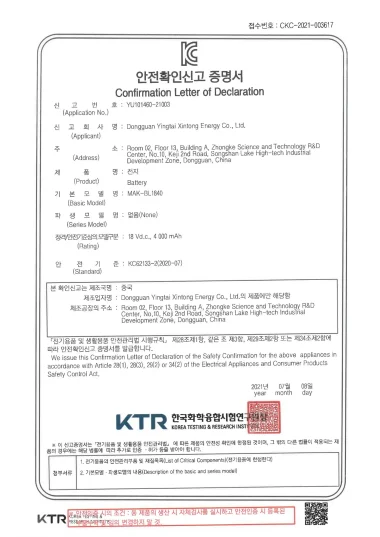
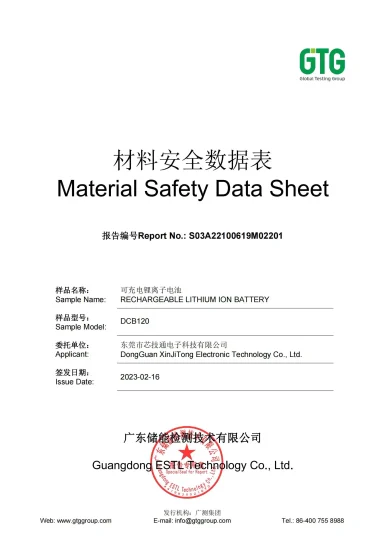
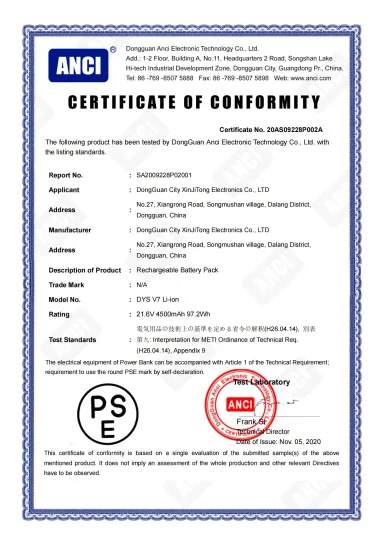
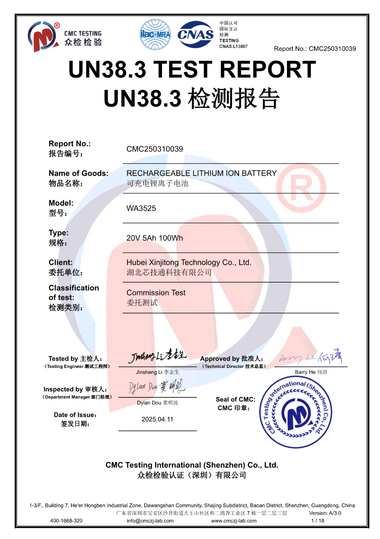
Certifications
Trust XNJTG for the highest standards of quality and compliance
XNJTG is dedicated to developing advanced lithium-ion battery technology that provides reliable and efficient power, while reducing environmental impact. Join us in driving progress and shaping a greener future.

Insights
Latest News
The latest industry news, interviews, technologies and resources.

OEM vs. Replacement EGO 56V Batteries: The Engineering & B2B Sourcing Guide
This engineering and procurement guide breaks down the structural differences between original OEM and aftermarket replacement EGO 56V battery packs. Written for tool fleet managers, repair networks, and wholesale distributors, it examines 14S internal cell binning tolerances, BMS communication protocols, safety compliance (UL 2271 / UN 38.3), and real-world total cost of ownership (TCO) to help buyers select reliable, high-margin manufacturing partners.

EGO 56V Battery Overheating: Causes, Fixes, and How to Prevent It
This technical guide examines the thermodynamic and electrical mechanisms behind EGO 56V battery overheating. Explaining Joule heating, mechanical tool drag, ambient temperature factors, and internal resistance surges, it provides grounds maintenance crews and equipment fleet operators with an empirical cross-testing framework to diagnose thermal cutoffs safely and prevent unnecessary pack replacements.

EGO 56V Battery Safety: Comprehensive User and Fleet Safety Guide
EGO 56V ARC Lithium batteries power lawn mowers, chainsaws, blowers, and trimmers. Safe operation depends on correct user practices—not just built-in BMS protections. This guide covers 10 essential safety rules: inspect before use, never use swollen/damaged batteries, keep contacts clean, use the correct charger, cool hot batteries before charging, charge at 5°C-40°C, prevent short circuits, never open or bypass the BMS, store in a cool dry place, and secure batteries from unauthorized access. Includes LED status codes, overheating response, fleet safety checklist, and B2B supplier verification framework.

Why Does My EGO 56V Battery Drain So Fast? Diagnostic Guide & Fixe
This technical diagnostic guide investigates the mechanical, thermal, and electrochemical root causes behind rapid EGO 56V battery drain. By differentiating between temporary workload surges (dull blades, wet grass) and irreversible cell capacity fade, it equips equipment operators, groundskeeping crews, and commercial fleet managers with a reproducible single-variable cross-testing protocol to eliminate guesswork and prevent unnecessary pack replacements.

Why Does My EGO Battery Shut Off During Use? Common Causes and Fixes
This technical troubleshooting guide analyzes the mechanical, thermal, and electrical root causes behind unexpected EGO 56V battery shutdowns during equipment operation. Covering motor torque overloads, dynamic voltage sag, thermal protection trips, terminal contact resistance, and cell group deterioration, it provides field technicians and commercial fleet managers with a systematic variable-isolation protocol to distinguish temporary protection events from genuine battery failure.
Let our battery power your success
Transform your path to success with our advanced battery technologies, while enjoying the perks of free technical guidance and tailored design services to meet your unique requirements.