
7 Signs Your DeWalt Charger Needs Replacing
This guide explains how to identify DeWalt charger failure, distinguish charger problems from battery faults, and decide when replacement is necessary. It focuses on reproducible field checks commonly used by technicians and fleet managers to reduce downtime and prevent battery damage.
Safety First
Before troubleshooting any charger:
-
Disconnect power before inspecting the housing or contacts
-
Stop using the charger immediately if there is smoke, melting plastic, or exposed wiring
-
Allow overheated equipment to cool before retesting
-
Follow the charger model’s operating manual when available
These precautions reduce the risk of electrical shock or thermal damage during inspection.
1. No Indicator Lights After Power Connection
Many chargers use LED indicators to show charging status or fault conditions. If the charger shows no lights at all after being connected to a known-working outlet, the internal electronics may not be receiving power.
Common causes include:
-
Internal fuse failure
-
Damaged power cord
-
Faults in the charger’s control board
Verification method
-
Test the wall outlet using another device
-
If the charger uses a detachable cord, test with a known-good cable
-
Insert a confirmed working battery
If the charger still shows no indicators, internal failure is likely and replacement may be required.
2. Persistent Error Flash Patterns
Many lithium battery chargers display error conditions through flashing LEDs. Repeated or unusual patterns can indicate communication problems between the charger and the battery pack.
Possible causes include:
-
Contaminated or oxidized contacts
-
Internal charger electronics faults
-
Battery pack protection system triggering repeatedly
Field check
-
Clean battery rails and charger terminals with isopropyl alcohol
-
Allow the charger to reset by unplugging it for about 10 minutes
-
Insert a second known-good battery for comparison
If identical error signals appear across multiple batteries, the charger may be malfunctioning.
3. Noticeably Longer Charging Time
A charger that previously filled a battery quickly but now takes significantly longer under similar conditions may have declining internal components or thermal regulation issues.
Possible contributing factors:
-
Aging electronic components inside the charger
-
Reduced cooling efficiency
-
Battery packs nearing end of life
Isolation step
Charge the same battery on another compatible charger.
If the second charger restores normal charge times, the original charger may be degrading.
4. Excessive Heat During Normal Charging
Moderate warmth is normal during charging, but unusually high housing temperatures or repeated thermal shutdowns can indicate cooling problems or internal electrical stress.
Potential causes include:
-
Blocked ventilation openings
-
Dust accumulation
-
Cooling fan failure (on fan-equipped models)
If the charger becomes significantly hotter than comparable units under the same load, discontinue use and inspect ventilation and airflow.
For OEMs/ODM and distributors sourcing Makita/DeWalt/Milwaukee/Bosch//RyobiDyson-compatible battery/charger, working with suppliers such as XNJTG—who combine pack-level design experience, BMS integration capability, and manufacturing process control—reduces the likelihood that failures escalate to forensic-level incidents in the first place.Click here to contact us

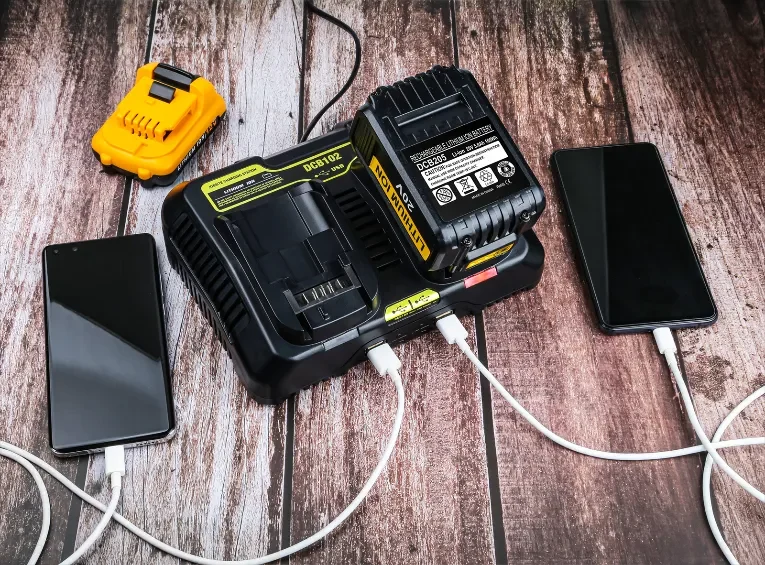
Replacement Dewalt Dcb104 12v 20v Battery Charger For Dewalt 12v 20v Max Xr Battery
5. Burning Odor or Visible Deformation
A persistent burning smell, discoloration, or softened plastic around vents may indicate internal overheating or electrical damage.
These symptoms can appear after:
-
Internal short circuits
-
Prolonged overheating
-
Mechanical damage to components
If these conditions appear, disconnect power immediately and avoid further operation until the unit is inspected or replaced.
6. Physical Damage or Electrical Irregularities
Visible structural damage often correlates with internal electrical faults.
Examples include:
-
Frayed or exposed power cables
-
Cracked charger housing
-
Sparks when inserting a battery pack
-
Loose internal parts
Any charger showing these symptoms should be removed from service because exposed conductors may present electrical hazards.
7. Multiple Batteries Showing Charging Abnormalities
When several batteries begin overheating, failing to charge, or terminating charge unusually early, the charger may be supplying unstable current or voltage.
However, battery aging must be ruled out first.
Recommended test
-
Charge one of the affected batteries on a different charger
-
Charge a known-good battery on the suspected charger
If problems occur only with the suspected charger, replacement is typically the most reliable solution.
Field Troubleshooting Protocol (Quick Isolation)
Technicians often follow a simple diagnostic sequence before replacing a charger:
Step 1 – Verify Power Source
Confirm the outlet and cord are functioning.
Step 2 – Clean Electrical Contacts
Dust, corrosion, or metal debris can interrupt charger-battery communication.
Step 3 – Cross-Test Batteries
Test multiple batteries across multiple chargers when possible.
Step 4 – Observe Charging Behavior
Look for unusual heat, unstable LEDs, or repeated charging interruptions.
Using this sequence reduces the risk of replacing a charger when the battery pack is actually the source of the problem.
Maintenance Practices That Extend Charger Life
Basic maintenance can reduce failure rates in fleet environments:
-
Remove dust from vents monthly
-
Maintain at least 10 cm of ventilation clearance around the charger
-
Avoid operation in extremely hot or cold environments
-
Store chargers in dry areas away from metal debris
These practices help maintain stable cooling and electrical contact over time.
When Replacement Is the Practical Choice
Replacement is typically recommended when:
-
The charger shows no response after power verification
-
Repeated error signals appear across multiple batteries
-
Severe overheating or electrical odor occurs
-
Physical damage exposes wiring or internal parts
For job sites or tool fleets, keeping one spare charger per group of active tools can prevent downtime if a primary charger fails.
FAQ
How can I tell whether the battery or charger is the problem?
The most reliable method is cross-testing: charge the same battery on another charger and charge a known-good battery on the suspected charger. Comparing the results isolates the faulty component.
Is it normal for a charger to become warm?
Yes. Lithium battery charging generates heat. However, excessive heat, repeated shutdowns, or unusually hot housings compared with other chargers may indicate cooling or electrical problems.
What causes red and green lights flashing repeatedly?
Many chargers use flashing indicators to show communication errors or temperature conditions. Cleaning contacts and retesting with another battery can help determine whether the charger or battery is responsible.
Can a faulty charger damage batteries?
Yes. Unstable charging behavior may lead to overheating, incomplete charging, or repeated fault conditions. If several batteries behave abnormally after charging, the charger should be inspected or replaced.
For OEMs/ODM and distributors sourcing Makita/DeWalt/Milwaukee/Bosch//RyobiDyson-compatible battery/charger, working with suppliers such as XNJTG—who combine pack-level design experience, BMS integration capability, and manufacturing process control—reduces the likelihood that failures escalate to forensic-level incidents in the first place.Click here to contact us