
Cell-Grading Standards Explained: What “A / B / C” Really Means for M-Series Replacement Packs
“A-grade”, “B-grade”, and “C-grade” are not formal industry standards but commercial claims, and for M-Series replacement packs their real meaning only exists where objective metrics, dispersion limits, reproducible test protocols, and traceable evidence are explicitly defined and enforced.
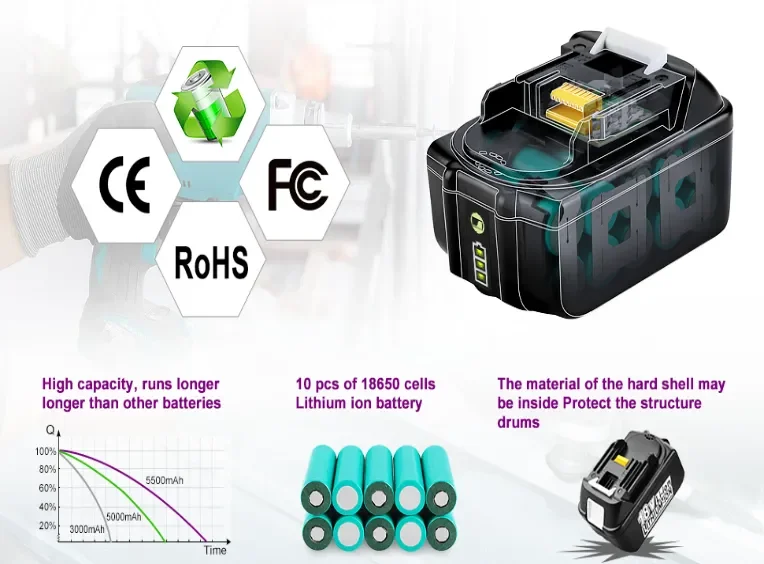
Why cell grading is an industry gray zone — and why buyers get misled
Cell grading sits at the intersection of manufacturing yield, secondary markets, and procurement cost pressure. This makes it fertile ground for ambiguity. Without shared definitions, suppliers may use identical grade labels to describe materially different realities—ranging from tight end-of-line yield dispersion to post-failure sorting—leaving buyers exposed to hidden safety risk, early-life failures, and warranty disputes that only surface after deployment.
In practice, “grade inflation” often occurs not through outright fraud, but through scope creep: cosmetic screening quietly substitutes for electrical qualification, or pack-level claims mask cell-level variability.
Definitions — what “A”, “B”, and “C” grade must mean in practice
In buyer-centric, enforceable terms, A-grade cells or packs meet new-like electrical performance expectations, with tight capacity and internal-resistance dispersion, no safety or protection flags, and full eligibility for nominal load, duty cycle, and standard warranty conditions.
B-grade material remains electrically safe and economically serviceable but shows declared and bounded derating—such as reduced usable capacity, elevated IR, or minor cosmetic defects—requiring restricted deployment, explicit derating rules, and adjusted warranty terms.
C-grade material is unsuitable for standard service. It is limited to controlled rebuild workflows, non-critical internal use, or scrap, and is explicitly excluded from general field deployment.
Where graded cells actually come from — origin matters more than the label
Cells sold as “graded” typically originate from several channels: factory yield dispersion, end-of-line screening fallout, overproduction inventory, returned or reworked lots, and secondary recovery streams.
Cells removed from a tight yield distribution behave very differently from cells pulled from returns or long-term storage, even if both are sold under the same grade label. This is why origin disclosure is as critical as electrical data—grade without provenance is incomplete information.
Grading metrics — the quantitative axes that actually define a grade
Meaningful grading relies on a limited but strict set of quantitative axes: measured capacity under defined conditions, internal resistance and its dispersion, self-discharge behavior, balance convergence, thermal response under load, and the absence of safety or protection flags.
Grade is not defined by a single number. It is defined by central tendency, spread, and stability over time across these metrics.

21.6V/22.2V/25.2V High Capacity Replacement Battery Pack for Dyson V6/V7/V8/V10/V11 Cordless Vacuum 18650/21700 Cell Li Ion Rechargeable Power Pack
Example grade thresholds — practical starting points for negotiation
The table below illustrates typical baseline expectations used by buyers to turn grade labels into measurable gates. These are not universal constants, but realistic starting points for contracts and IQC:
| Metric | A-Grade (New-like) | B-Grade (Derated) | C-Grade (Restricted) |
|---|---|---|---|
| Capacity vs nominal | ≥95% | 80–95% | <80% or unstable |
| Capacity dispersion | Tight, bounded | Bounded but wider | Unbounded / mixed |
| IR vs new baseline | ≤110% | 110–140% | >140% or erratic |
| IR dispersion | Narrow | Controlled | Uncontrolled |
| Self-discharge | Normal | Slightly elevated | Abnormal |
| Protection flags | None | None (post-screen) | May be present |
| Field eligibility | Full | Restricted | Excluded |
This table is what prevents “A/B/C” from becoming a marketing adjective.
Test protocols — how grades are assigned, verified, and disputed
Grade assignment must be anchored in reproducible protocols that define preconditioning state, charge and discharge rates, rest periods, temperature control, measurement accuracy, and acceptance logic.
Crucially, these same protocols must be usable by buyers for incoming verification and dispute resolution. If a supplier’s grading method cannot be independently reproduced, the grade claim is not enforceable.
Sampling & IQC strategy — detecting mixed-grade lots early
Incoming inspection should assume mixed-grade risk unless disproven. Single-unit checks are insufficient. Statistically meaningful sampling combined with dispersion analysis is required to detect lot mixing, selective packing, or boundary-pushing behavior that would otherwise remain invisible until field failures accumulate.
Labeling, traceability, and lot control rules
Each graded lot must be uniquely identifiable, with traceability linking cells or packs to origin, test conditions, results, and permitted use cases. Physical labeling, digital records, and storage segregation prevent silent downgrades, cross-grade mixing, or accidental misuse during assembly and shipment.
Safety & handling rules tied to grade
Safety controls scale with grade risk. A-grade material follows standard handling rules. B-grade material requires tighter monitoring, explicit derating, and restricted rework paths. C-grade material is handled only under controlled conditions, with hard barriers preventing unintended entry into customer-facing products.
Pricing & warranty logic — why grade must map to liability
Grade directly maps to price and warranty exposure. A-grade supports standard pricing and warranty duration. B-grade justifies cost reduction paired with shortened or conditional warranty coverage. C-grade carries no field warranty and is priced accordingly. Making this explicit prevents commercial pressure from silently inflating grade claims.
Rework & re-qualification workflows for B- and C-grade material
B-grade packs may enter defined rework or re-qualification workflows—such as tighter matching, pack-level derating, or additional screening—after which their grade and permitted use are explicitly updated.
C-grade material may only transition upward if it undergoes full re-qualification equivalent to new intake, with evidence showing that prior exclusion criteria no longer apply. Absent this, it remains restricted or scrapped.
Contract clauses buyers should insist on
Effective procurement contracts define grade metrics, sampling plans, test protocols, traceability requirements, permitted use cases, and dispute mechanisms. Grade labels without these clauses are descriptive, not binding.
FAQ
Are A/B/C grades industry standards: No, they are commercial labels unless backed by metrics and evidence.
Is B-grade unsafe: Not inherently, but it requires declared derating and controlled use.
Can C-grade ever be upgraded: Only through full re-qualification equivalent to new intake.
Why is dispersion more important than averages: Because safety and reliability failures emerge from outliers, not means.
Should buyers accept grade claims without test data: No—grade without evidence is a liability transfer.
For OEMs and distributors sourcing Makita-compatible battery/charger, working with suppliers such as XNJTG—who combine pack-level design experience, BMS integration capability, and manufacturing process control—reduces the likelihood that failures escalate to forensic-level incidents in the first place.