
Charge Cycle Forensic — Reading Wear Patterns on Milwaukee M18 Charger
Every Milwaukee M18 charger records its history in wear patterns—contact discoloration, housing stress, and subtle PCB clues. Understanding these signs allows fleet managers and site crews to predict failures, optimize replacements, and extend battery/charger lifespan. This guide turns forensic observation into actionable maintenance SOPs.

External Inspection — Surface Clues
| Component | Normal | Warning / Cause | Action |
|---|---|---|---|
| Battery contacts | Even, glossy | Blackened, pitted, rough → high resistance, hotspots | Clean if minor; replace if deep pitting |
| Plastic housing | Smooth, consistent color | Yellowing → UV/heat; Stress lines → impacts; Gloss changes → frequent insertion | Monitor Grade 1–2; replace Grade 3+ |
| Power cord / plug | Flexible, no cracks | Cracks, stiff, twisted → electrical hazard | Immediate replacement |
Pro Tip: Contacts are the single highest risk component for intermittent charging or heat spikes. Weekly inspection reduces downtime significantly.
Internal Insights
Only qualified personnel should open chargers; high-voltage risks exist.
-
Heat-deformed housing + burnt smell → swollen or leaking electrolytic capacitors.
-
PCB discoloration or burn marks → MOSFET, bridge rectifier, or capacitor stress.
-
Loose solder joints → intermittent charging, arcing, or failure under load.
Note: Document internal inspection findings to correlate with fleet maintenance logs—repeat failures often indicate batch/component issues.
Wear Pattern Classification — “Like New” to “Critical”
| Grade | Description | Fleet Action |
|---|---|---|
| 1 — Light | Minor surface marks, clean contacts | Continue normal use |
| 2 — Moderate | Slight contact wear, minor housing yellowing | Clean contacts, monitor cycles |
| 3 — Noticeable | Discoloration, stress lines, slightly warped housing | Mark as backup; avoid critical tasks |
| 4 — Severe / Critical | Burnt contacts, housing cracks, heat deformation | Stop use immediately; replace |
Pro Insight: Chargers rated Grade 3 can still be used in low-stakes or spare roles, but any Grade 4 unit should never be deployed under load.
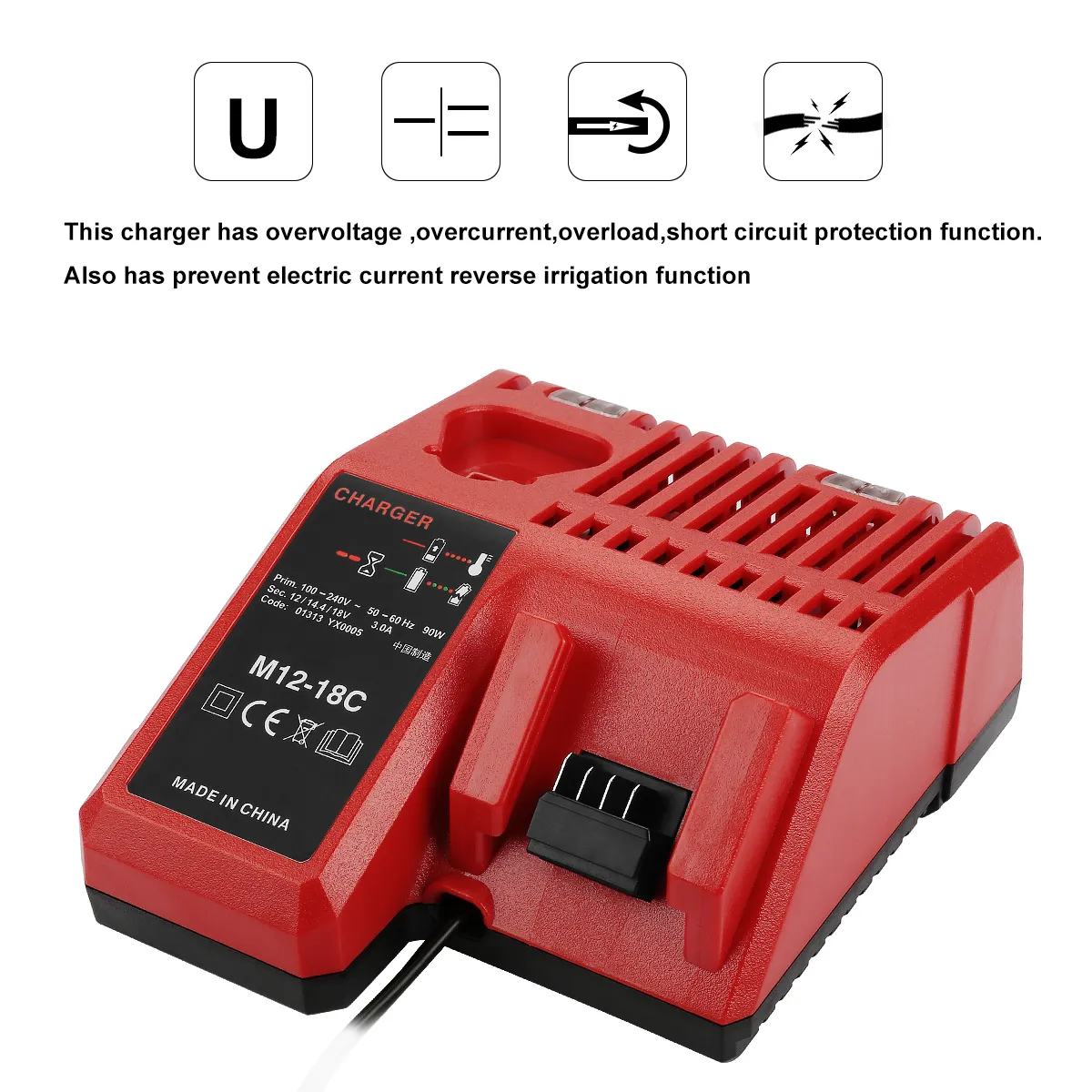
MIL-M12_18 12V-18V M18 Lithium Ion Battery Charger for Milwaukee Power Tool Lithium Ion Battery
From Diagnosis to Action — Replacement Decisions
-
Grades 3–4: Continuing use risks intermittent charging, overheating, or battery damage → replace.
-
Fleet strategy: Rotate chargers to balance duty cycles; log inspection results.
-
Product pitch: “XNJTG chargers feature corrosion-resistant contacts, robust shells, and heavy-duty materials engineered for M18 workflows.”
-
Action Link: [View Milwaukee M18-compatible chargers]
Conclusion
Routine visual and forensic inspection of chargers is a low-cost, high-return preventive measure. Understanding wear patterns allows crews to act before failures occur, safeguarding batteries, crew safety, and project schedules.
CTA: “Invest in durable M18 chargers today to minimize downtime.”
FAQ
-
Q: Can badly arced contacts be cleaned?
A: Minor oxidation can be cleaned; deep pitting or burn marks require replacement for safety. -
Q: Is a yellowed charger safe?
A: Cosmetic yellowing alone isn’t harmful. Combined with worn contacts or stiff cords, it indicates aging and possible replacement. -
Q: Are aftermarket chargers OEM-quality?
A: Yes. Materials and design meet or exceed OEM specifications for contact durability, shell integrity, and thermal handling.