
Cold Weather Impact on Ryobi ONE+ Batteries: Real Results & Protocols
A safety-first, reproducible field & lab protocol to measure how cold affects Ryobi ONE+ packs, practical interpretation of results, and immediate SOPs fleets and homeowners can use to avoid cold-related failures and hidden life loss.
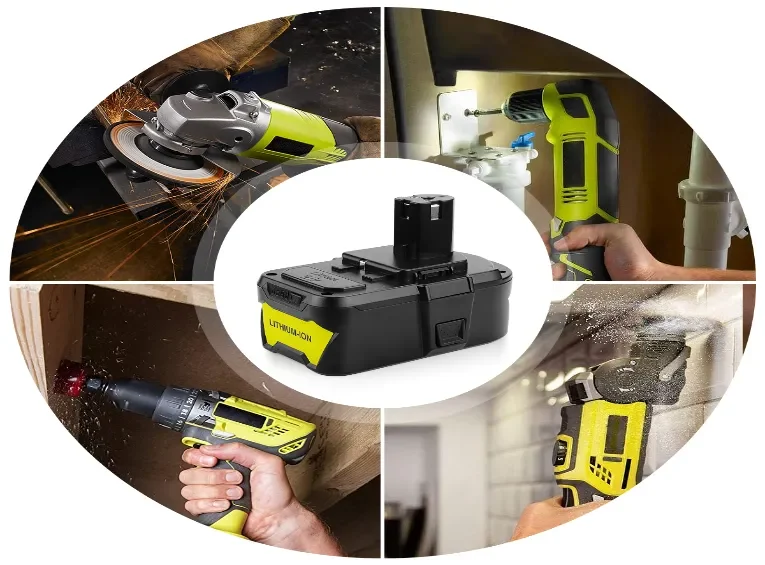
What are the absolute safety rules you must follow before doing cold tests?
Safety first — MUST READ. Cold testing involves live cells under stress—treat them as you would any charged power tool. Non-negotiable rules:
-
Quarantine any swollen, leaking, or smoking pack immediately and move it to a non-combustible area.
-
Do not charge packs below the vendor-specified minimum temperature; charging cold risks lithium plating and permanent capacity loss.
-
Work on a non-combustible bench with PPE: insulated gloves, eye protection, and face shield for technician work.
-
Keep a Class ABC/BC extinguisher within arm’s reach.
-
Define stop rules and enforce them: halt and quarantine the pack if surface temperature > 50 °C, if you smell chemicals, see deformation, or detect smoke. Document every stop event and never bypass BMS protections.
Make stop rules and PPE visible at every test station.
Why does cold reduce battery performance in plain language?
Cold slows ionic motion in the electrolyte which increases internal resistance (IR). Higher IR produces larger voltage sag under load and reduces usable capacity. Charging while cold risks lithium plating (metal deposition on the anode) — a permanent failure mode that reduces capacity and raises internal short risk. Smart BMS/chargers often refuse or severely limit charge current when cold; that refusal is protective. In short: cold → higher IR → more sag, less runtime, and potential permanent damage if charged while cold.
What Ryobi-specific factors should you inspect before testing?
Record the following for every pack/test so results are comparable and traceable:
-
Pack SKU & serial (note if standard, HP/High-Output, or special edition).
-
Cell form factor (18650 vs 21700) — 21700 often has higher thermal mass and different IR behavior.
-
Thermistor placement (surface vs cell-adjacent) — surface temps can underreport internal cell cold.
-
Charger model & firmware — different chargers have different wake/LED behaviors.
-
Tool model used for load tests (or resistive load spec).
Log these before you start — they explain cross-unit variance.
Which temperatures and scenarios should your test matrix include?
Recommended checkpoints (repeatable matrix): +20 °C (baseline), +10 °C, 0 °C, −10 °C, −20 °C. For each temp run:
A. OCV after thermal equilibration.
B. Charge-acceptance probe (attempt gentle charge; log current/LED behavior). Do not force.
C. Discharge tests at defined loads (light / medium / heavy), e.g. 5 A / 10 A / 15 A or substitute representative tools (trimmer/blower/mower).
D. Duty-cycle endurance: repeated on/off cycles to measure thermal accumulation (example: 10 × (5 min ON / 5 min OFF)).
Test each condition 2–3× and test multiple packs of same SKU to capture unit variance.
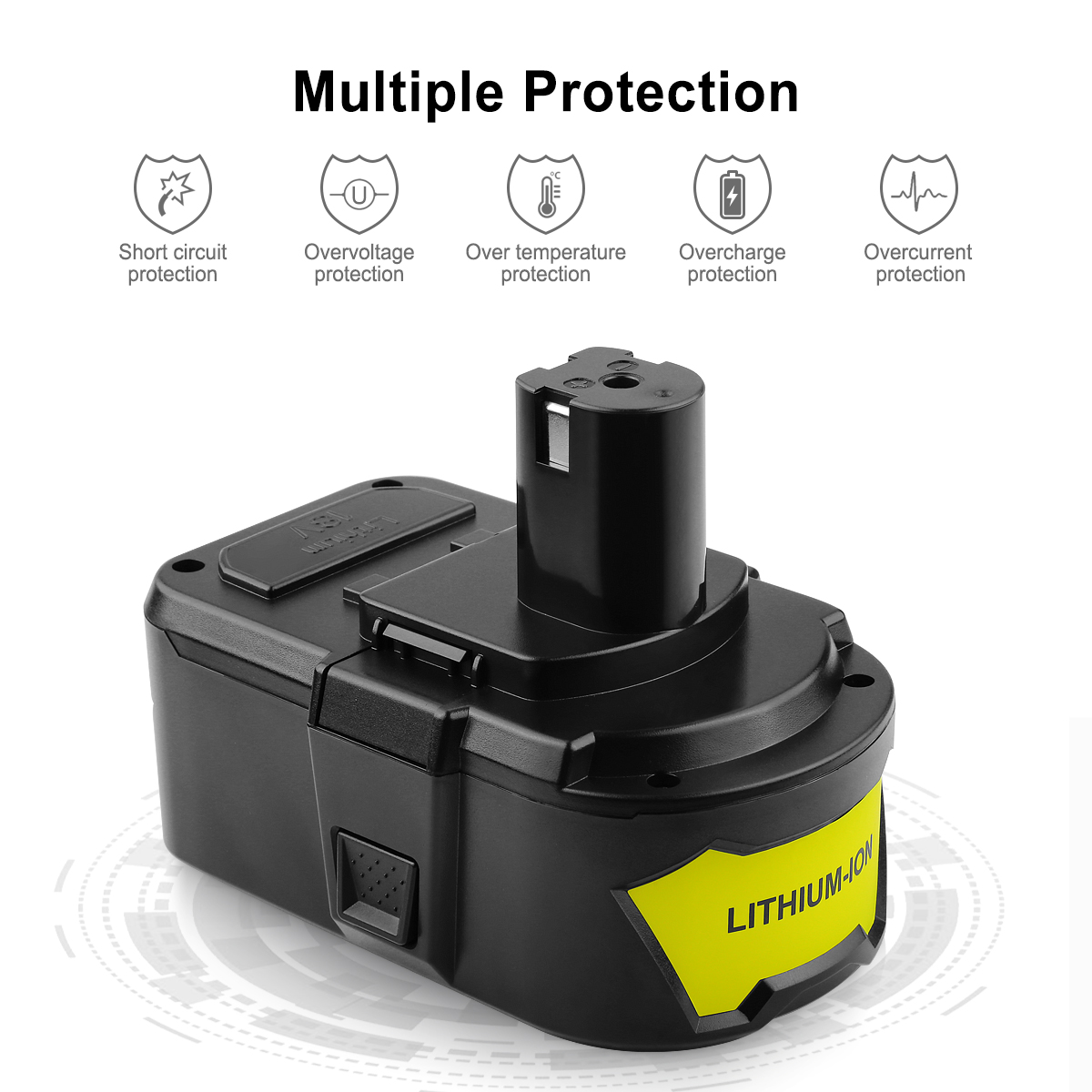
18V Lithium Ion Battery Replacement for Ryobi ONE+ Cordless Tools P108 P192
How do you run a reproducible step-by-step test protocol?
-
Precondition: Fully charge each pack at 20 °C, rest 30–60 min. Record pack SKU, serial, start OCV, and ambient.
-
Equilibrate: Move pack to target temperature chamber/outdoor location; wait 30–60 min for surface temp stabilization (monitor surface temp).
-
Record baseline OCV.
-
Charge-acceptance probe: Attempt gentle charge; log charger current, time-to-LED-change, any refusal behaviors. Do not override BMS or charger protections.
-
Discharge run: Apply defined load for a fixed interval or until cutout. Log time-to-cutout, start/end voltages, peak sag.
-
Duty-cycle test (optional): e.g., 10 cycles of 5 min ON / 5 min OFF; record runtime decay and ΔT.
-
Warm recovery: Return pack to 20 °C and re-run charge acceptance to confirm recovery or persistent damage.
-
Stop rules: Stop immediately on odor, smoke, swelling, or surface temp > 50 °C.
Record voltage every 10 s during load and temperature every 30 s for consistent traces. Add operator initials and UTC timestamp to each log row.
How should you interpret cold-test results — practical rules of thumb?
-
OCV: small reductions at cold are normal; large low OCV at rest suggests aging or prior damage.
-
Runtime vs baseline: report minutes and percentage of 20 °C baseline (e.g., 42 min = 70% of baseline).
-
V-sag: healthy packs typically ≤ ~1 V sag under a light/typical load; > ~2 V is a red flag for high IR.
-
Charge refusal: charger refusing to charge at low temp is normal — warm pack first. Never force charge.
-
Recovery check: if warmed packs return to near-baseline, cold effects were temporary; if not, permanent degradation likely occurred.
Always present both absolute and percent-change metrics for procurement/ops.
What real result patterns should you expect from most tests?
From multiple field/lab runs you should expect:
-
Around 0 °C: runtime ≈ 60–80% of room-temperature baseline.
-
Below −10 °C: runtime often drops to ≈ 40–60% of baseline.
-
Charger refusal commonly appears below 0–5 °C depending on charger/BMS.
-
HP / low-IR packs may retain a higher share of runtime at mild cold, but thermistor placement and BMS tuning cause variability.
When publishing, show both raw numbers and normalized charts (runtime vs temperature) for clarity.
What practical mitigations and SOPs should teams adopt immediately?
Operational SOP:
-
Storage: Keep spares indoors at > 10 °C when possible; long-term store at 30–50% SOC.
-
Staging: Stage 1–2 active packs in an insulated pouch or warm pocket before shift start.
-
Swap rule: Do not insert a cold pack into tools unless you need immediate use; swap with a warm spare.
-
Warming: Warm packs by bringing indoors or using insulated bags; do not use heat guns or direct concentrated heat.
-
Charge rule: Charge only at or above manufacturer-recommended temp; if unknown, default to ≥ 10 °C for charging.
-
Derating: Shorten continuous duty cycles in cold; add rest periods between heavy runs.
-
Logging: Record cold exposures and any post-warm capacity loss for warranty/RMA evidence.
-
Stop rules: Stop testing or use if surface temp > 50 °C or if you detect odor/smoke — quarantine and document.
What are the common cold-weather FAQs teams ask?
Q: Can I charge a frozen pack to speed workflow? — No. Charging below safe temps risks lithium plating and permanent damage.
Q: Will a higher-Ah pack always be better in the cold? — Not always. Chemistry, internal design and BMS matter as much as Ah.
Q: Will occasional cold use permanently hurt my pack? — Occasional brief exposures usually recover after warm-up; repeated cold charge/use without warming accelerates aging.
Include these in FAQ schema (structured data) when publishing.
Closing note
Cold weather reduces usable energy and increases risk if charging/using packs while cold. A short, repeatable test matrix, strict stop rules, and conservative charge thresholds (default ≥ 10 °C) let fleets quantify impact, protect crews, and require defensible cold-performance from suppliers.