
How to Choose a Replacement Milwaukee Battery
A practical buyer guide for choosing a replacement Milwaukee battery by checking platform compatibility, runtime needs, charger behavior, thermal stability, and batch consistency before purchase approval.

Why This Guide Matters
Selecting the right replacement Milwaukee battery is not only a product choice. For B2B buyers, it is also a sourcing decision that affects runtime stability, charger compatibility, field reliability, and return risk.
At XNJTG, we have been developing and manufacturing replacement batteries and chargers since 2010, with more than 12 years of experience, 3,000,000+ battery packs produced, 1,000+ customers worldwide, 30+ R&D engineers, and a 50,000+ m² manufacturing facility. Our work covers replacement battery and charger solutions for major power tool brands, including Milwaukee, Makita, DeWalt, and Bosch. (xnjtg.com)
Quick Answer: What Should Buyers Check First?
The first decision is not capacity, runtime, or price. It is platform match.
A replacement Milwaukee battery must match the exact tool family and charging system it is designed for. In practice, buyers should confirm whether the tool requires an M12, M18, or MX FUEL battery before comparing Ah ratings or product claims.
That is because a battery can look similar on the outside and still fail in real use if the platform, terminal structure, or communication logic is wrong.
Why Milwaukee Battery Platform Compatibility Matters More Than Voltage
Many buyers focus only on voltage. That is not enough.
For a replacement Milwaukee battery, compatibility depends on more than the printed rating. Buyers should also consider terminal design, battery management behavior, communication with the tool, charger recognition, and thermal protection logic.
A pack that physically fits is not automatically a true match. In procurement terms, compatibility should mean the battery powers the tool correctly, charges reliably, and behaves consistently under load.
Milwaukee Battery Systems: M12 vs M18 vs MX FUEL
M12 Milwaukee Battery System
The M12 Milwaukee battery platform is built for compact cordless tools where low weight and portability matter most.
Typical use cases include installation work, inspection tasks, compact drivers, and service tools. For these applications, runtime is important, but size and handling often matter just as much.
M18 Milwaukee Battery System
The M18 Milwaukee battery platform is Milwaukee’s widely used system for heavier cordless tools and broader jobsite applications.
Common tool categories include drills, impact drivers, grinders, saws, and outdoor equipment. Buyers usually compare runtime, discharge stability, charging speed, weight, and heat behavior when selecting an M18 Milwaukee battery.
MX FUEL Milwaukee Battery System
The MX FUEL Milwaukee battery platform is intended for equipment-level applications with much higher energy demand.
This system is used for industrial and heavy-duty jobsite equipment, where runtime, current delivery, and thermal control become even more critical. MX FUEL should never be treated as interchangeable with M12 or M18.
Why Physical Fit Does Not Guarantee Milwaukee Battery Compatibility
A replacement Milwaukee battery may slide into place and still fail in real operation.
True compatibility requires stable electrical contact, correct communication with the tool, charger acceptance, secure locking, and coordinated protection behavior. If any of those elements are weak, the battery may charge inconsistently, shut down early, or fail under load.
For this reason, fit testing alone is not enough. Buyers should treat fit as only the first screening step.
Milwaukee Battery Capacity: What Ah Really Means
Capacity affects runtime, not platform compatibility.
A higher Ah rating usually means longer operating time, but it can also increase battery weight and charging time. A smaller pack may improve handling, while a larger pack may reduce swap frequency on high-demand jobs.
| Milwaukee Battery Capacity | Main Advantage | Main Trade-Off |
|---|---|---|
| Smaller Ah packs | Lower weight | Shorter runtime |
| Medium Ah packs | Balanced use | Moderate runtime |
| High Ah packs | Longer runtime | More weight and longer charge time |
The right Milwaukee battery is the one that matches the workload, tool duty cycle, and field operating pattern. Bigger is not always better.
Milwaukee Battery Charger Compatibility Should Be Tested Too
Battery evaluation should always include the charger.
A properly matched Milwaukee battery charger helps maintain stable current, accurate temperature monitoring, reliable charge completion, and repeatable charging cycles. When charging problems appear, the battery is not always the only cause. Contact quality, charger condition, and platform mismatch can also create failures.
This is also an area where XNJTG’s engineering capability adds value. The company states that it provides custom charger solutions and uses an air-cooling charging technology designed to reduce overheating during charging, improve charging efficiency, and help optimize battery life. (xnjtg.com)
Why Thermal Behavior Matters in a Milwaukee Battery
Heat affects reliability, runtime stability, and protection response.
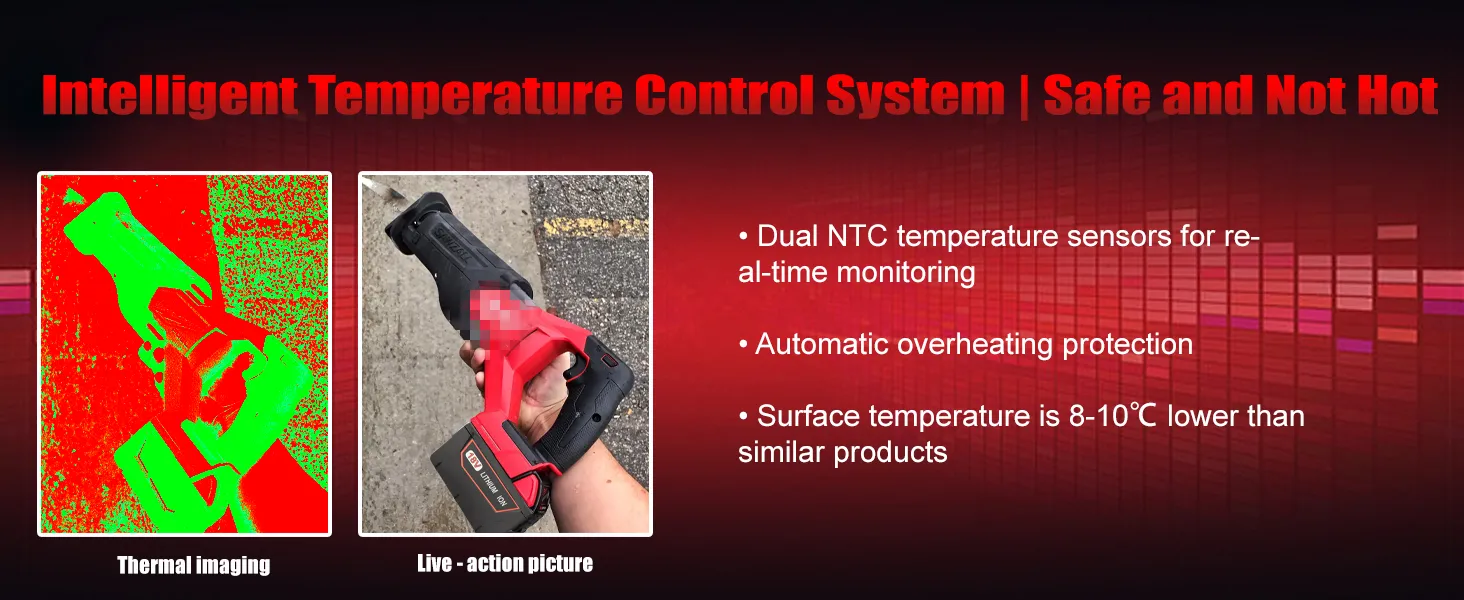
During heavy work, a poorly designed Milwaukee battery may show unstable voltage, excessive temperature rise, early shutdown, or inconsistent recovery after load. These issues matter because they affect actual jobsite performance, not just label specifications.
A better battery should maintain more stable discharge behavior and protection response under demanding conditions.
Original vs Compatible Milwaukee Battery: Which One Is Right?
The decision depends on the purchasing goal.
Original Milwaukee Battery
Original packs are often chosen when the buyer needs maximum platform confidence, strong warranty alignment, and low compatibility risk. They are also a common choice when fleet standardization matters and procurement teams want the simplest approval process.
Compatible Milwaukee Battery
A compatible replacement Milwaukee battery can be a practical option when the buyer needs better cost control, private-label flexibility, or large-volume sourcing. In these cases, build quality and validation matter more than the word “compatible” itself.
At XNJTG, replacement battery development is backed by in-house R&D and manufacturing. The company states that it builds smart BMS systems, supports digital communication between battery, tool, and charger, and monitors voltage, temperature, current, state of charge, and health status to protect cells from overcharge, overdischarge, and overheating. (xnjtg.com)
Replacement Milwaukee M18 Battery For Milwaukee 18v Tools
What Buyers Should Test Before Approving a Replacement Milwaukee Battery
For B2B purchasing, label claims are not enough. A structured test process is the most reliable way to reduce returns and field failures.
Suggested Test Scope
| Test Category | What to Verify |
|---|---|
| Platform match | Correct M12, M18, or MX FUEL family |
| Mechanical fit | Stable insertion and secure lock-in |
| Charger behavior | Reliable charge acceptance and completion |
| Runtime | Consistent operation under representative load |
| Thermal behavior | Controlled temperature rise during use and charge |
| Voltage stability | Stable discharge performance |
| Protection response | Correct overload and thermal cutoff behavior |
| Batch consistency | Similar performance across samples |
Practical Test Method
A useful approval process is to test multiple samples from the same batch under the same tool, same charger, and same workload profile. That makes it easier to identify weak cell quality, inconsistent BMS behavior, or unstable assembly quality.
For procurement teams, batch consistency is often as important as single-sample performance.
Why Supplier Capability Matters for Milwaukee Battery Sourcing
A strong replacement Milwaukee battery supplier should provide more than a product listing. Buyers should look for a manufacturer with real engineering depth, production scale, and logistics support.
XNJTG positions itself as a full-solution battery manufacturer with imported equipment, one-stop processing services, and a global warehousing network in the USA, Canada, and Europe. The site also states that the company has 300,000 square feet of warehouse space in North America and Europe, and that it has experience with power tool batteries, vacuum batteries, battery chargers, and PCB assembly. (xnjtg.com)
For wholesale buyers, this matters because it can reduce lead time, improve supply continuity, and support faster sample-to-order conversion.
Common Milwaukee Battery Buying Mistakes
The most common mistakes are predictable and avoidable:
-
Choosing only by Ah rating
-
Ignoring platform compatibility
-
Assuming physical fit means real operation
-
Skipping charger validation
-
Testing only one sample
-
Ignoring heat behavior under load
These mistakes usually lead to inconsistent runtime, early complaints, and higher return risk.
What Makes a Reliable Milwaukee Battery Replacement
A dependable replacement Milwaukee battery usually combines several quality factors:
-
stable lithium-ion cell quality
-
accurate battery management behavior
-
durable terminal construction
-
strong internal weld quality
-
reliable thermal protection
-
repeatable production consistency
In real use, reliability matters more than a single printed specification. Buyers should look for stable discharge, predictable charging, and consistent behavior across multiple units.
How B2B Buyers Evaluate Milwaukee Battery Suppliers
Professional procurement teams normally ask for evidence, not marketing language.
A serious supplier evaluation may include:
-
compatibility documentation
-
runtime test reports
-
charger behavior validation
-
thermal performance data
-
certification records
-
batch consistency records
-
warranty and support terms
XNJTG says it has passed international certifications such as SGS, FDA, and ISO9001, and that it serves global customers with technical guidance and tailored design services. The site also highlights that its replacement battery and charger products are built for safe and reliable power systems. (xnjtg.com)
For wholesale procurement, supplier proof is part of the product. A replacement Milwaukee battery should be supported by repeatable test data and clear quality control records.
FAQ
How do I choose the correct Milwaukee battery?
Start by identifying the required platform: M12, M18, or MX FUEL. That is the most important compatibility step.
Are M12 and M18 Milwaukee batteries interchangeable?
No. They are separate platform families and should not be treated as interchangeable.
Does higher Ah mean better Milwaukee battery performance?
Higher Ah usually means longer runtime, but it can also increase weight and charging time. The best choice depends on the actual workload.
Why does one Milwaukee battery work in one tool but not another?
Different tools place different electrical and thermal demands on a battery, and platform compatibility can also differ.
What should buyers test before bulk purchasing Milwaukee batteries?
Fit, charger behavior, runtime, thermal response, voltage stability, protection response, and batch consistency should all be tested.
Can a compatible Milwaukee battery work with the original charger?
A properly designed compatible pack should work with the matching platform charger, but that should always be verified in testing.
Conclusion
Choosing a replacement Milwaukee battery requires more than matching voltage or Ah rating. Buyers should first confirm platform compatibility, then evaluate runtime needs, charger behavior, thermal stability, and production consistency.
For B2B procurement, the best replacement battery is not the one with the highest number on the label. It is the one that performs consistently in real tools, real charging cycles, and real jobsite conditions.
For buyers who need a supplier with engineering capability, manufacturing scale, and global service support, XNJTG offers replacement battery, charger, BMS, and PCB assembly solutions backed by more than a decade of development experience and large-scale production capacity. (xnjtg.com)