
Kobalt 24V Battery Compatibility Mistakes: Why Charging Problems Happen and How to Fix Them
This B2B guide explains why Kobalt 24V battery charging failures happen—focusing on system-level compatibility mistakes rather than simple battery defects. Covers six root causes: wrong platform mixing (24V/40V/80V), charger mismatch, third-party battery design gaps, temperature protection, improper storage, and dirty contacts. Includes a recovery probability table, diagnostic workflow, and supplier verification checklist. Essential for distributors, fleet operators, and repair centers.

Charging issues in the Kobalt 24V system are often misdiagnosed as battery failure. In many cases, the real cause is system-level incompatibility, charging logic mismatch, or environmental factors affecting battery behavior.
In a modern lithium-ion ecosystem, battery performance is determined not only by voltage alignment but also by charger communication, BMS logic, thermal regulation, and electrical contact integrity. When any of these layers fail to align, users may experience red light errors, charging interruptions, or sudden runtime loss.
What Does Kobalt 24V Battery Compatibility Actually Depend On?
Compatibility is not defined by voltage alone. Even within a single platform, multiple technical layers determine whether a battery can safely charge and discharge.
Why voltage alone is not enough
A 24V label does not guarantee system compatibility. Modern cordless platforms such as Kobalt 24V MAX rely on multi-layer coordination between battery and charger systems.
Key technical factors
- Battery platform architecture
- Charger recognition protocol
- Terminal and interface design
- Battery Management System (BMS) logic
- Thermal sensing and cutoff thresholds
- Protection rules (overcharge, overcurrent, short circuit)
If any layer is mismatched, charging failure may occur even if the battery physically fits the tool.
Why Does Using the Wrong Battery Platform Cause Charging Failure?
Can 24V, 40V, or 80V systems be mixed?
No. These platforms are structurally incompatible and cannot be interchanged.
Why incompatibility occurs
- Different voltage architecture
- Different communication protocols
- Different protection thresholds
- Different charger logic validation systems
Common failure symptoms
- Battery not recognized by charger
- Continuous red LED indicator
- No charging initiation
- Immediate charging shutdown
Key rule: Battery, charger, and tool must all belong to the same 24V MAX platform.
How Does the Wrong Charger Trigger Charging Errors?
A charger is not just a power supply. It is an intelligent control system responsible for safety and communication.
Charger functions include
- Battery handshake recognition
- Charging current regulation
- Temperature monitoring
- Safety cutoff control
Effects of charger mismatch
- Charging does not start
- Flashing red error lights
- Intermittent charging cycles
- Incomplete charge termination
| Condition | Recovery Probability |
|---|---|
| Short incorrect connection | Medium |
| Repeated mismatch use | Low |
| Thermal stress exposure | Very Low |
Why Do Third-Party Batteries Sometimes Fail to Charge?
Aftermarket batteries may fail if they do not fully replicate OEM communication and safety behavior.
Common design gaps
- Incomplete temperature sensor integration
- Simplified BMS architecture
- Weak cell balancing design
- Charger handshake incompatibility
What a proper replacement must ensure
- Full charger compatibility
- Thermal protection integration
- Overcharge and over-discharge protection
- Stable BMS communication logic
A well-engineered replacement battery should behave identically to OEM charging behavior.
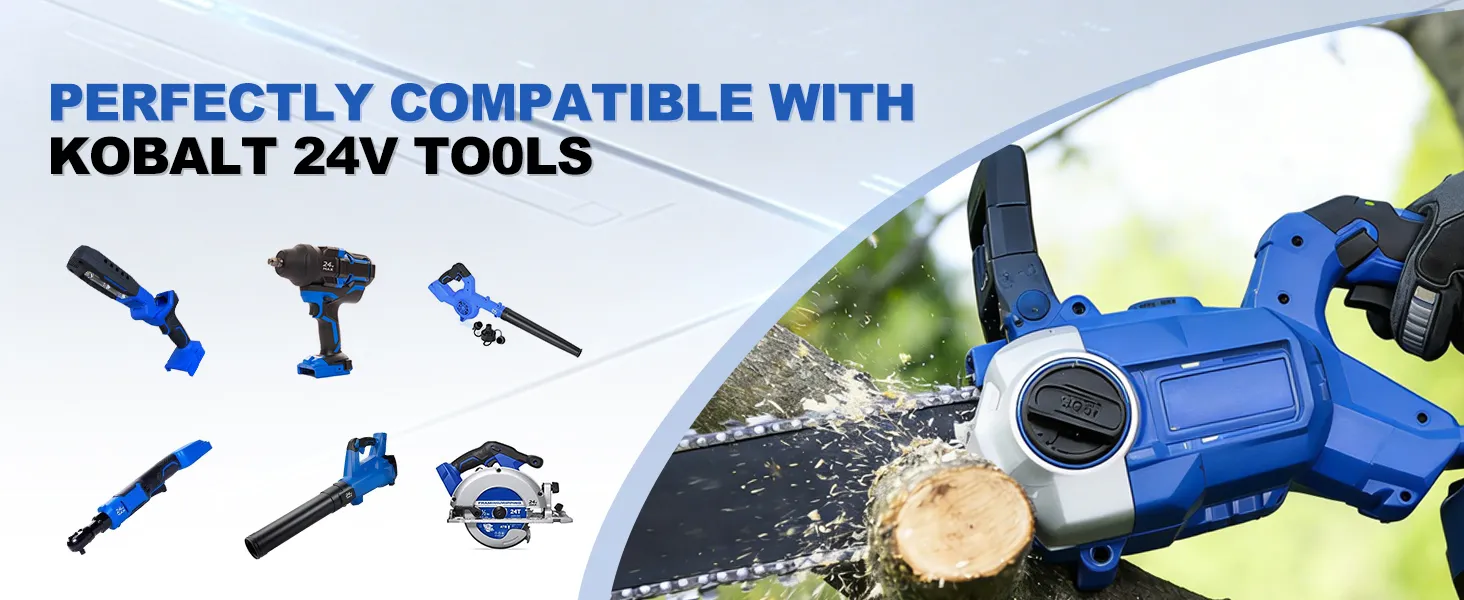
Replacement 24v Battery For Kobalt Tools
Why Does Temperature Block Charging Even When the Battery Is Healthy?
Thermal protection behavior
Lithium-ion batteries automatically suspend charging outside safe temperature ranges.
High temperature effects
- Charging delay or rejection
- Overheat protection activation
Low temperature effects
- Temporary charging disablement
- Apparent battery unresponsiveness
Recovery method
- Remove battery from charger
- Allow temperature stabilization
- Wait until room temperature is reached
- Retry charging cycle
Every XNJTG replacement battery/charger is tested for correct fit, charger handshake, and thermal cut-off before leaving our facility. We help you avoid the “physical fit but system fail” trap.
Get free technical consultation, sample test reports, and bulk pricing → Contact our engineering team
How Does Improper Storage Lead to Charging Problems?
Common storage mistakes
- Fully discharged storage
- Fully charged long-term storage
- High-temperature environments
Recommended storage strategy
- Maintain 40–60% charge
- Store in dry and cool environment
- Avoid deep discharge state
- Check periodically during storage
Can Dirty or Damaged Contacts Stop Charging Completely?
Impact of contact issues
Even small resistance at terminals can interrupt both power delivery and communication signals.
Symptoms
- Intermittent charging
- Random disconnection
- False error indicators
Maintenance steps
- Clean terminals
- Remove oxidation or debris
- Check alignment
- Ensure firm connection
Why Does Reduced Runtime Not Always Mean Compatibility Failure?
A battery may still charge normally but show degraded performance due to internal aging.
Aging indicators
- Shorter runtime
- Voltage drop under load
- Increased heat generation
- Reduced peak power output
If performance remains poor after cleaning and testing, internal cell degradation is likely irreversible.
Can Kobalt 24V Battery Issues Be Recovered?
| Issue Type | Recovery Probability | Action |
|---|---|---|
| Temperature lock | High | Normalize temperature |
| Deep discharge | Medium | Controlled charging attempt |
| Platform mismatch | High | Correct replacement |
| BMS communication failure | Medium | Test with OEM charger |
| Physical damage | None | Replace battery |
How Can Buyers Avoid Compatibility Problems?
- Confirm 24V MAX platform compatibility
- Verify charger communication support
- Check thermal protection design
- Validate overcharge/over-discharge protection
- Ensure OEM charger compatibility testing
- Review supplier quality control system
FAQ
Are all Kobalt 24V batteries interchangeable?
Only within the same 24V MAX platform with verified compatibility.
Can a 24V battery be charged with a 40V charger?
No, platforms are not compatible.
Why does the charger show a red light?
Usually temperature, contact, or communication issues.
Can deep discharge batteries be recovered?
Sometimes, depending on duration and condition.
Do third-party batteries work with OEM chargers?
Only if full BMS and communication protocols are correctly implemented.
When should a battery be replaced?
When performance degradation persists after troubleshooting.
Conclusion
Most Kobalt 24V charging failures are caused by system-level mismatches rather than simple battery defects.
A structured diagnostic approach—covering platform compatibility, charger behavior, thermal conditions, and electrical contact quality—helps quickly identify root causes and reduces unnecessary replacements.
Proper compatibility control and usage practices significantly improve battery lifecycle stability and system reliability.
Every XNJTG replacement battery/charger is tested for correct fit, charger handshake, and thermal cut-off before leaving our facility. We help you avoid the “physical fit but system fail” trap.
Get free technical consultation, sample test reports, and bulk pricing → Contact our engineering team