
Makita Battery Safety Considerations for DIY Replacements
This article outlines the safety risks of DIY Makita 18V battery replacement, emphasizing that whole-pack swaps are far safer than cell-level repairs. It details mandatory safety rules, required tools and PPE, acceptable DIY scope, and clear stop/quarantine criteria. Key guidance includes never bypassing the BMS, avoiding cell soldering, using current-limited wake procedures only under strict monitoring, and quarantining any pack showing swelling, heat, or abnormal behavior to prevent fire and injury.
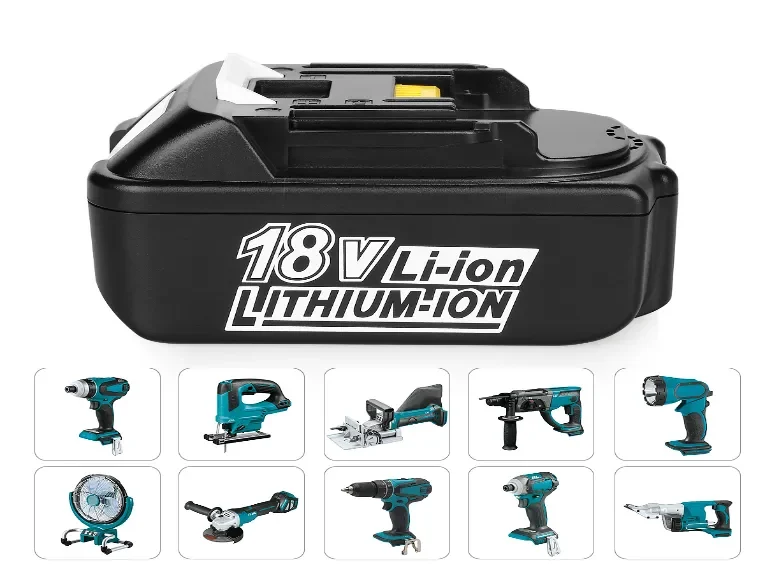
DIY replacement of Makita 18V (BL-series-style) battery packs or cells carries high risk of thermal runaway, chemical exposure, electrical shock, and fire, and should only be done with full safety precautions or avoided entirely in favor of whole-pack swaps from authorized sources. While cost savings are possible, improper handling of cells, BMS boards, or busbars can lead to sudden overheating, permanent pack damage, or catastrophic failure. This guide explains the key risks, essential tools and PPE, step-by-step safe replacement practices, verification procedures, and proper disposal/RMA actions — all focused on engineering-safe, reproducible methods rather than marketing advice.
Safety first (must-read)
-
If a pack is swollen, smoking, hot (> ~50 °C), leaking or smells burned — do not open or charge it. Move it outdoors to a non-combustible surface, isolate, label QUARANTINE, and contact a certified recycler.
-
Never short battery terminals, bypass BMS protection, or attempt cell-level work without blast containment, certified lab facilities and PPE. DIY cell replacement is high-risk and should only be done by trained technicians with proper facilities.
-
Use insulated tools, eye protection, and heat-resistant gloves. Work on a non-conductive, non-combustible surface with a fire extinguisher rated for battery fires nearby. Maintain ESD control for PCBA work.
-
Do not modify, solder, or re-route high-current busbars or pack housings in ways that change mechanical or thermal behavior.
What you should have before attempting any safe, small-scope replacement work (tools & environment)
-
Low-voltage insulated screwdrivers and torque drivers.
-
Digital multimeter and a current-limited bench supply (for safe wake/spot checks).
-
Infrared thermometer or thermal gun.
-
Fire-safe containment (metal box or lithium battery safety bag) and appropriate fire extinguisher (Class D or manufacturer guidance).
-
Small soldering iron with temperature control (if doing PCB-level soldering) and fume extraction; spot soldering on battery tabs is not recommended unless you’re trained.
-
Manufacturer service documents, BMS wiring diagrams, and replacement-cell spec sheets (cell chemistry, capacity, rated continuous current, internal resistance).
-
If you lack any of the above or blast containment, do not attempt cell-level replacement — limit yourself to battery-module swap (replace entire pack with authorized unit).
Legal & warranty note (brief)
DIY replacement voids most manufacturer warranties and may breach local safety or transport regulations. For workplace or fleet equipment, check insurance and local hazardous-material rules before performing in-house repairs. For large fleets consider certified repair vendors.
Safe replacement scope — what is acceptable for a careful DIYer vs what must be left to professionals
Acceptable (lower-risk) DIY actions: external terminal cleaning, replacing pack housing screws, swapping entire replacement pack from a reputable source, or replacing a removable external fuse.
High-risk actions to avoid unless fully equipped and trained: opening sealed packs, replacing individual cells, reworking/rewiring BMS PCBA, heating or reflow of pack tabs, or fabricating busbars. These require lab-grade safety, cell-matching equipment, and blast containment.
Step-by-step safe pack-replacement (swap whole pack — recommended path)
-
Power down tool: switch off and remove any accessory.
-
Remove suspect pack: keep it pointed away from you; set aside on a non-combustible surface inside a safety tray/bag. Label if damaged.
-
Inspect tool terminals: look for carbon, deformation, or foreign matter. Clean with isopropyl and lint-free cloth if needed.
-
Install replacement pack (OEM or certified compatible): ensure mechanical fit, full seating and positive latching.
-
Initial smoke/sanity check: with the tool unloaded, apply a brief activation (no heavy load) and watch for unusual noises, sparks, or odor. If any abnormality → remove pack and quarantine.
-
Controlled first load: run a light duty (low torque/speed) 10–20 s operation to verify stable voltage and no overheating at terminals or pack. Use IR spot-check after run.
-
Log pack serial & immediate behavior (time/date, tool model) for fleet traceability.
Safe protocol for attempting pack-wake or charger-wake (if pack refuses charger) — bench, current-limited
-
ONLY do this on packs that are not swollen, not warm, and not smelly. If in doubt, quarantine.
-
Place pack on non-combustible surface and connect a current-limited bench supply set to a very low current (start ≤ C/20 — e.g., 0.2 A for 4 Ah pack). Monitor pack temperature continuously with IR.
-
If OCV rises slowly and temperature remains stable for ~10–30 min, you may cautiously increase current up to C/10 under constant observation. Stop immediately if temp rises >10 °C or odor appears.
-
If pack accepts current and voltage climbs predictably, stop, allow rest, and then attempt OEM charger. If charger also accepts, perform a controlled capacity spot check before returning to service.
-
If pack refuses or heats during low-current wake, quarantine and escalate to certified lab/RMA.
Never bypass BMS MOSFETs or short cells to 'force' a wake.
If you must open a pack (only in certified facility) — essential precautions (overview)
-
Use blast-resistant enclosure and PPE (blast shields, respirator).
-
Pre-characterize OCV and note pack serials.
-
Label and photograph all internal wiring and connectors before disassembly.
-
Maintain cell orientation and traceability — replace only with cells of same chemistry, capacity, and preferably same lot after matching voltage and DCIR.
-
Use proper tab-spot welding equipment for cell interconnects; never solder cells directly (heat damage risk).
-
Re-validate BMS functionality and cell-group voltages before reassembly.
-
Perform full safety screening (charge/discharge cycles, EIS/ICA, thermal cycling) before returning pack to service.
(Again: these steps are for certified labs — do not attempt without facilities.)
Verification and tests after any safe-replacement or swap
Immediate checks (field): visual inspection, terminal temperature after 10–30 s of light load, and tool behavior under light operation.
Bench checks (recommended): measure OCV after 30–60 min rest; perform a short controlled load while logging V(t) to look for excessive sag; run an IR scan for hotspots.
If available (lab): low-rate capacity test (0.2C), pulse-DCIR test at representative current, and BMS event-log readout. Any abnormal DCIR, rapid sag, or hotspot → retire pack.
Disposal, quarantine & RMA handling
-
Damaged or suspect packs must be isolated, labeled, and stored outdoors in a ventilated non-combustible area away from other inventory until a certified recycler or vendor picks them up.
-
Do not cut, puncture, incinerate, or immerse packs. Transport per local hazardous-material rules (UN38.3 considerations).
-
For warranty/RMA: collect evidence (photos, pack serial, tool model, time-stamped traces if available) and follow vendor RMA instructions — do not ship swollen packs without vendor-approved packaging and notification.
Simple troubleshooting flow for common DIY scenarios
-
Tool won’t power with a new/replacement pack: check seating, latch, and terminal cleanliness. Swap with known-good pack to isolate tool vs pack.
-
Replacement pack shows immediate heat on light load: remove, quarantine; do not use.
-
Pack shows low runtime but charges OK: run bench pulse DCIR and low-rate capacity to distinguish high DCIR vs capacity loss.
-
Pack refuses charger LED or never charges: attempt OEM charger-wake for short monitored period; if unsuccessful, quarantine.
When to stop and call professionals (clear stop criteria)
-
Any swelling, venting, strong odor, smoke, or persistent heating under small currents.
-
OCV well below expected pack resting voltage (e.g., pack-level < ~10–12 V for 18V-class) or charger refuses to wake.
-
BMS board damage, burned traces, or missing thermistor/connector integrity issues.
-
Uncertain provenance of replacement cells or inability to match cell specs and DCIR.
FAQ (practical, concise)
Q — Can I replace individual cells in a Makita pack at home?
A — Not recommended. Cell replacement requires matched cells, proper tab welding, BMS recalibration and blast-safe facilities. DIY cell swaps are high risk.
Q — Is it safe to repair a cracked pack housing?
A — External housing repairs (non-electrical) are acceptable if terminals and internals are unaffected; if internal components were stressed, treat pack as suspect and test thoroughly.
Q — How do I know a replacement pack is compatible?
A — Use packs that match nominal voltage and provide equal or higher continuous/pulse current rating and include a compatible BMS handshake. If unsure, use OEM or certified equivalents.
Q — Can I use soldering to reconnect battery tabs?
A — Direct soldering to cell tabs is risky — heat can damage cells. Spot welding is the correct method for tab work; leave tab repair to trained technicians.
Q — What fire extinguisher should I have on hand?
A — Follow local guidance; many facilities use Class D or multipurpose extinguishers rated for lithium fires and signage for battery incidents. Have a plan to call emergency services.
Summary — one-line takeaway + 3 immediate actions
DIY replacement of Makita packs should prioritize safety: prefer whole-pack swaps over cell-level repairs, never bypass BMS, and quarantine any pack showing swelling, heat or odd behavior.
Immediate actions:
-
If you plan repairs, acquire a current-limited bench supply, IR thermometer, insulated tools and a certified safety bag; otherwise do not open packs.
-
For any replacement, run a 30–60 s light-load sanity check and IR-scan before regular use.
-
Quarantine and document any suspect pack (photos, serial, symptoms) and contact a certified recycler or vendor RMA.