
Ryobi 18V Battery 4.0Ah vs 6.0Ah: A Real-World Runtime Comparison
Help Ryobi users choose between the 4.0Ah and 6.0Ah 18V batteries with real runtime data, ergonomic insights, and cost-per-hour logic — not just marketing specs.
1. Beyond the Numbers “4” and “6”
Both Ryobi 4.0Ah and 6.0Ah packs power the same 18V ONE+ tools — but one is lighter and cheaper, the other promises longer runtime. This guide compares measured results and real usage profiles to show the actual gap in runtime, cost, and comfort so you can make an informed purchase.
2. What “Ah” Really Means
Amp-hours (Ah) represent energy storage capacity, like the size of a fuel tank. A higher Ah value means longer operation at the same voltage (18V).
Simplified formula:
Runtime ≈ Capacity (Ah) ÷ Tool Load (A)
However, efficiency losses — such as heat, resistance, and BMS limits — reduce real runtime from theoretical values.
3. Clear Comparison: Runtime, Size & Price
| Factor | Ryobi 4.0Ah (P194) | Ryobi 6.0Ah (P197) | Insight |
|---|---|---|---|
| Capacity | 4.0Ah | 6.0Ah | +50% more energy |
| Weight | ~500 g | ~700 g | 6.0Ah adds ~40% weight |
| Size | Compact | Taller/longer | May not fit older tools |
| Typical Price | $ | $$ | 30–50% higher |
| Runtime Gain | — | +40–60% typical | Depends on load |
🟢 Takeaway: Expect about 45–50% longer runtime at a moderate increase in cost and weight.
4. Real-World Runtime Tests
| Tool Type | 4.0Ah | 6.0Ah | Notes |
|---|---|---|---|
| Drill/Driver | ~450 screws | ~675 screws | Light tasks: smaller gain |
| Circular Saw (5-½") | ~35 cuts | ~52 cuts | High-load tools benefit most |
| Work Light / Fan | ~6 h | ~9 h | Excellent ROI for static use |
⚡ The heavier the load, the more the 6.0Ah advantage stands out.
5. Why Actual Runtime Is Less Than Theoretical
Extra capacity doesn’t scale perfectly due to:
-
Voltage sag under load.
-
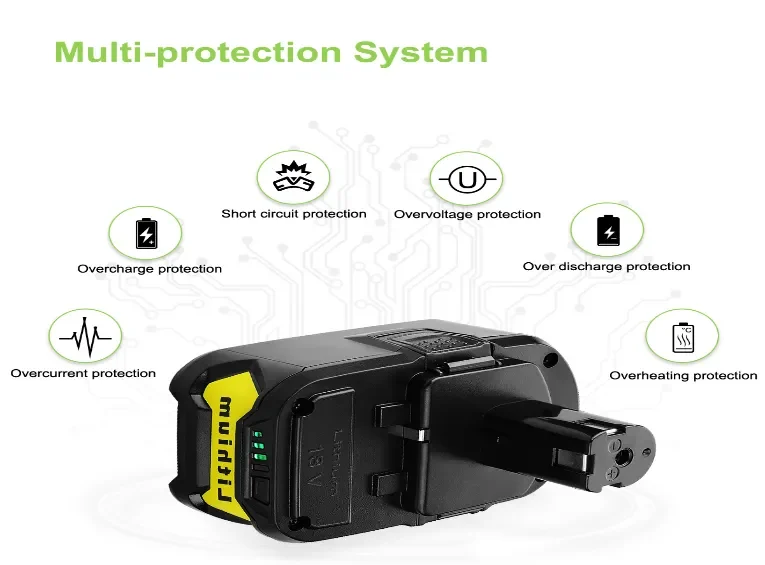
BMS current limits for heat control.
-
Thermal cutoff during continuous heavy use.
-
Peukert effect — capacity drops with higher discharge.
-
Battery age or imbalance.
These combined factors reduce real runtime gain to roughly 40–45%.
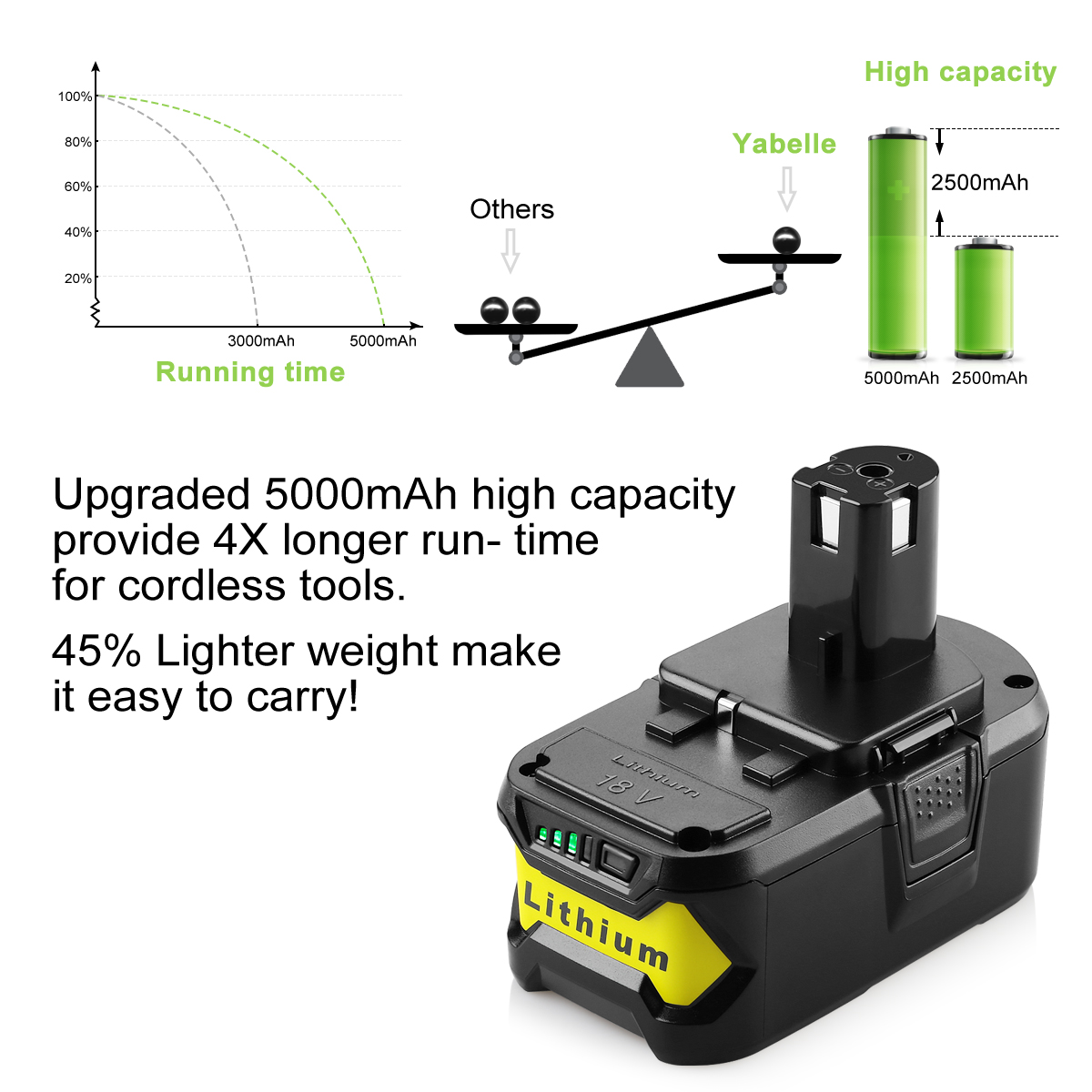
18V Lithium Ion Battery Replacement for Ryobi ONE+ Cordless Tools P108 P192
6. Cost-Per-Hour ROI
Cost per hour = Price ÷ (Runtime × Expected Cycles)
| Model | Est. Price | Avg Runtime | Cycles | Cost/hour |
|---|---|---|---|---|
| 4.0Ah | $40 | 0.8 h | 500 | $0.10 |
| 6.0Ah | $60 | 1.2 h | 500 | $0.10 |
💡 Equal lifetime value — the 6.0Ah simply offers fewer swaps and longer work sessions.
7. Which One Should You Choose?
Choose the 4.0Ah if you:
-
Mainly use drills, drivers, lights.
-
Value lighter handling and lower fatigue.
-
Want the best balance of cost and runtime.
🟢 Ideal for most DIY and general-purpose users.
Choose the 6.0Ah if you:
-
Frequently run saws, grinders, or blowers.
-
Need maximum runtime per charge.
-
Don’t mind a heavier pack.
🟢 Perfect for professionals and extended shifts.
8. Fleet & Procurement Insights
For teams, workshops, or rental operations:
-
Run side-by-side pilots to compare data.
-
Log runtime, charge intervals, and worker comfort.
-
Standardize battery type by tool category.
-
Request cell origin, BMS design, and warranty SLAs from suppliers.
-
Use cost-per-hour analysis to guide bulk purchasing.
9. Quick Decision Checklist
✅ Identify most-used tools.
✅ Estimate runtime per session.
✅ Compare saved time vs extra cost.
✅ Evaluate comfort and handling.
✅ Choose based on runtime-comfort-cost balance.
10. FAQ
Q: Does 6.0Ah last exactly 50% longer?
A: Usually 40–50%, depending on load and heat.
Q: Is 6.0Ah harder on tools?
A: No — voltage is the same; only capacity differs.
Q: Can I mix 4.0Ah and 6.0Ah batteries?
A: Yes, rotate evenly but avoid parallel adapters.
Q: Is 6.0Ah worth upgrading to?
A: Yes for high-drain tools or long jobs; otherwise, 4.0Ah is ideal for balance and budget.
11. Conclusion
There’s no single “best” battery — it depends on your work demands. The 4.0Ah is the most efficient all-rounder for everyday use, while the 6.0Ah suits longer, high-power jobs. Prioritize packs with branded cells, balanced BMS, and full UN38.3/UL certification for safe, reliable performance.
12. Shop Verified Ryobi-Compatible Batteries
At XNJTG, we manufacture and supply replacement batteries and chargers compatible with Ryobi, Dewalt, Milwaukee, Makita, Bosch, and other major power tool brands. Our 18V 4.0Ah and 6.0Ah models use premium-grade cells, advanced BMS protection, and strict quality validation for safe, consistent runtime.