
Snow Joe Replacement Batteries: 24V/48V Procurement Guide 2026
This B2B procurement guide helps distributors, fleet operators, and repair centers source reliable Snow Joe 24V and 48V IONMAX replacement batteries. It covers platform compatibility (24V single, 48V dual-battery, 100V dedicated), real-world runtime comparisons across equipment types, key procurement evaluation criteria (capacity verification, internal resistance, cycle life, charger testing), supplier qualification checklists, winter performance considerations, and a practical troubleshooting guide. Essential for reducing warranty claims and ensuring equipment uptime.

- 1. Snow Joe Battery Ecosystem Overview
- 2. Runtime Comparison Under Real Conditions
- 3. How Procurement Teams Evaluate Replacement Batteries
- 4. Questions to Ask an Aftermarket Supplier
- 5. Why Winter Conditions Stress Snow Joe Batteries
- 6. Troubleshooting Guide for Common Issues
- 7. FAQ for Buyers
- 8. Conclusion & Supplier Checklist Download
🔋 Snow Joe Battery Ecosystem Overview
One of the most common purchasing mistakes is confusion between Snow Joe battery platforms. While multiple battery systems may appear similar, they are designed for different power requirements and are not necessarily interchangeable.
| Platform | Battery Configuration | Typical Equipment | Compatibility Notes |
|---|---|---|---|
| 24V IONMAX | Single 24V battery | Trimmers, blowers, hedge trimmers | Shared within 24V ecosystem |
| 48V IONMAX | Two 24V batteries | Snow blowers, lawn mowers | Uses paired 24V batteries |
| 100V Platform | Dedicated battery pack | Heavy-duty outdoor equipment | Not compatible with 24V |
| Commercial High‑Power | Dedicated systems | Professional‑grade equipment | Separate architecture |
⏱️ Runtime Comparison Under Real Conditions
Battery capacity affects runtime, but real-world performance depends on equipment type, environmental conditions, and workload intensity.
| Battery Model | Relative Energy | Leaf Blower Runtime | Snow Blower Runtime |
|---|---|---|---|
| 24VBAT-LT | Lower | Short-duration tasks | Limited |
| 24VBAT-LTE | Medium | Moderate operation | Suitable for routine removal |
| 24VBAT-XR | Higher | Extended operation | Longest runtime among common models |
Why runtime varies between users: Even identical batteries can produce different results due to snow depth, grass height, ambient temperature, tool mode, and operator technique. Treat estimates as comparative references, not guarantees.
📊 How Procurement Teams Evaluate Snow Joe Replacement Batteries
Professional buyers rarely evaluate batteries solely on voltage and Ah ratings. Instead, they assess measurable performance indicators that affect long‑term reliability and operating cost.
| Evaluation Item | Why It Matters |
|---|---|
| Capacity Verification | Confirms usable stored energy |
| Internal Resistance Testing | Indicates efficiency and heat generation |
| Cycle Life Validation | Estimates long‑term service life |
| Charger Compatibility Testing | Reduces charging‑related failures |
| Thermal Performance Testing | Verifies operation under demanding conditions |
| Batch Consistency Review | Ensures predictable quality across orders |
A battery labeled as 4.0Ah may not deliver its rated capacity under field conditions. Therefore, professional buyers request test reports, validation data, and sample evaluations before approving large‑volume purchases.
Five aftermarket 4.0Ah units from different suppliers were tested against an OEM Snow Joe battery on a 24V snow blower at -5°C.
• Charger recognition: 3 of 5 aftermarket units completed full charge; 2 triggered error lights (NTC mismatch).
• Runtime (continuous heavy snow): OEM = 28 min; passing aftermarket = 24–26 min; failing units = 10–14 min with early shutdown.
• Thermal rise: Passing units stayed below 55°C; failing units exceeded 65°C.
➡️ Conclusion: Pre‑purchase validation is critical. Supplier quality varies significantly; ask for thermal and charger test reports.
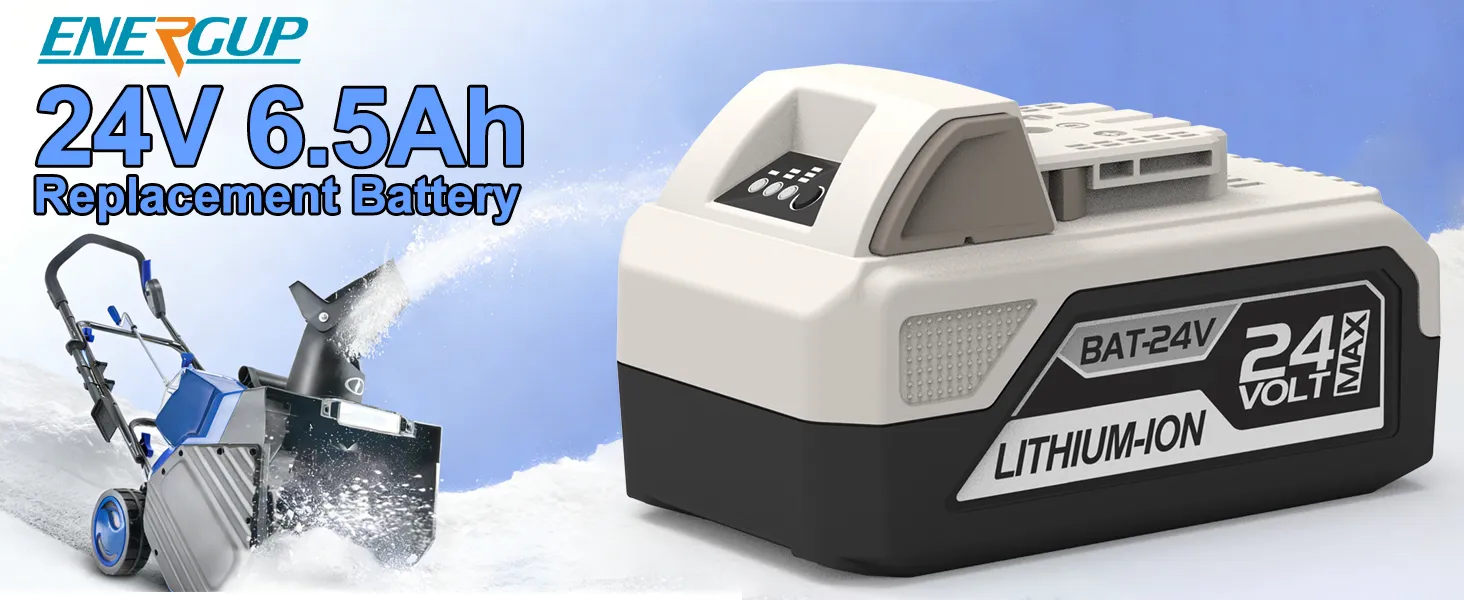
Replacement Snow Joe 24v 24vbat,ltx,lte,lt,xr Power Tool Battery For Snow Joe Power Tools
📋 Questions to Ask an Aftermarket Battery Supplier
Not all replacement battery suppliers provide the same level of engineering validation or quality assurance. Before purchasing, request evidence supporting compatibility and performance claims.
- Can the supplier identify cell origin and specifications?
- Are charger compatibility tests available?
- Is cycle‑life testing documented?
- Are thermal performance evaluations available?
- Does the supplier maintain batch traceability?
- Can pilot samples be tested before volume orders?
| Supplier Capability | Basic Vendor | Qualified Supplier |
|---|---|---|
| Capacity Verification Reports | No | Yes |
| Charger Compatibility Validation | No | Yes |
| Traceability Records | Limited | Yes |
| Technical Support | Basic | Structured |
| Sample Testing Availability | Limited | Yes |
| Warranty Process | Minimal | Defined |
Suppliers capable of providing objective technical documentation generally present lower procurement risk than vendors relying solely on marketing claims.
❄️ Why Snow Joe Batteries Face Greater Stress During Winter
Snow Joe equipment is frequently used in cold‑weather applications where lithium‑ion batteries encounter operating conditions that differ significantly from normal temperatures.
| Temperature | Expected Effect |
|---|---|
| 25°C (77°F) | Normal performance |
| 0°C (32°F) | Moderate runtime reduction |
| −10°C (14°F) | Noticeable power reduction |
| Below −20°C (−4°F) | Significant performance limitations |
What happens inside the battery? As temperature decreases:
- Internal resistance increases
- Voltage sag becomes more pronounced
- Available capacity decreases
- Charging efficiency declines
These effects do not necessarily indicate battery failure. In many cases, performance improves after the battery returns to a moderate operating temperature.
🛠️ Snow Joe Battery Troubleshooting Guide
Many operational issues can be diagnosed through a simple inspection process before replacing equipment or batteries.
| Symptom | Possible Cause | Recommended Action |
|---|---|---|
| Battery will not charge | Charger incompatibility or protection mode | Verify charger model and battery temperature |
| Runtime significantly reduced | Cell aging or low temperature | Perform capacity evaluation; warm battery before use |
| Battery becomes unusually hot | High load or internal fault | Discontinue use and inspect |
| Charger displays flashing error | Communication or charging fault | Test with another compatible charger |
| Tool shuts down unexpectedly | BMS protection activation | Allow cooling; inspect load conditions |
| Battery not recognized | Contact contamination or compatibility issue | Clean terminals; verify model compatibility |
A structured troubleshooting process can often identify the root cause without immediately replacing the battery.
❓ FAQ for Buyers
Can I use a 24V IONMAX battery in a 48V IONMAX tool?
No. 48V IONMAX tools require two 24V batteries connected in series. A single 24V battery will not operate the tool, and using incorrect voltage may damage the system.
Are aftermarket Snow Joe batteries safe with OEM chargers?
They can be, if correctly engineered with matching thermistor response and communication logic. Always test samples on your actual charger before bulk purchase.
Why does my battery runtime vary so much between seasons?
Temperature, load type (snow vs. grass), and battery age all affect runtime. Cold weather reduces lithium‑ion performance temporarily.
How many cycles can I expect from a quality replacement battery?
A well‑built battery with Grade‑A cells typically delivers 300–500 cycles before capacity drops below 80%.
What is the most important test before buying replacement batteries?
Charger compatibility and thermal performance under load are the top predictors of field reliability. Always request test reports.
🎯 Conclusion: Build a Reliable Snow Joe Battery Sourcing Program
Snow Joe battery systems are platform‑specific—24V IONMAX, 48V IONMAX (dual 24V), 100V, and commercial systems are not interchangeable. Professional buyers should evaluate capacity verification, internal resistance, cycle life, charger compatibility, thermal performance, and batch consistency. Winter operation requires additional attention to temperature management. The most reliable procurement decisions come from supplier documentation and validation testing, not specification comparison alone.
To simplify your supplier evaluation, we've prepared a comprehensive checklist covering all the critical tests and documents to request.
If you are sourcing a battery for jobsite tools or building a wholesale power tool battery, we support OEM/ODM replacement batteries and chargers, sample validation, and certification coordination for global markets. (XNJTG)