
XNJTG’s 3–5 Year Spare-Parts Strategy for Makita-Style Chargers
A supplier-side explanation of how XNJTG plans, stocks, and validates spare parts for Makita-style replacement chargers over a 3–5 year lifecycle, covering failure-driven part prioritization, inventory logic, repair boundaries, firmware continuity, and audit-ready service evidence.
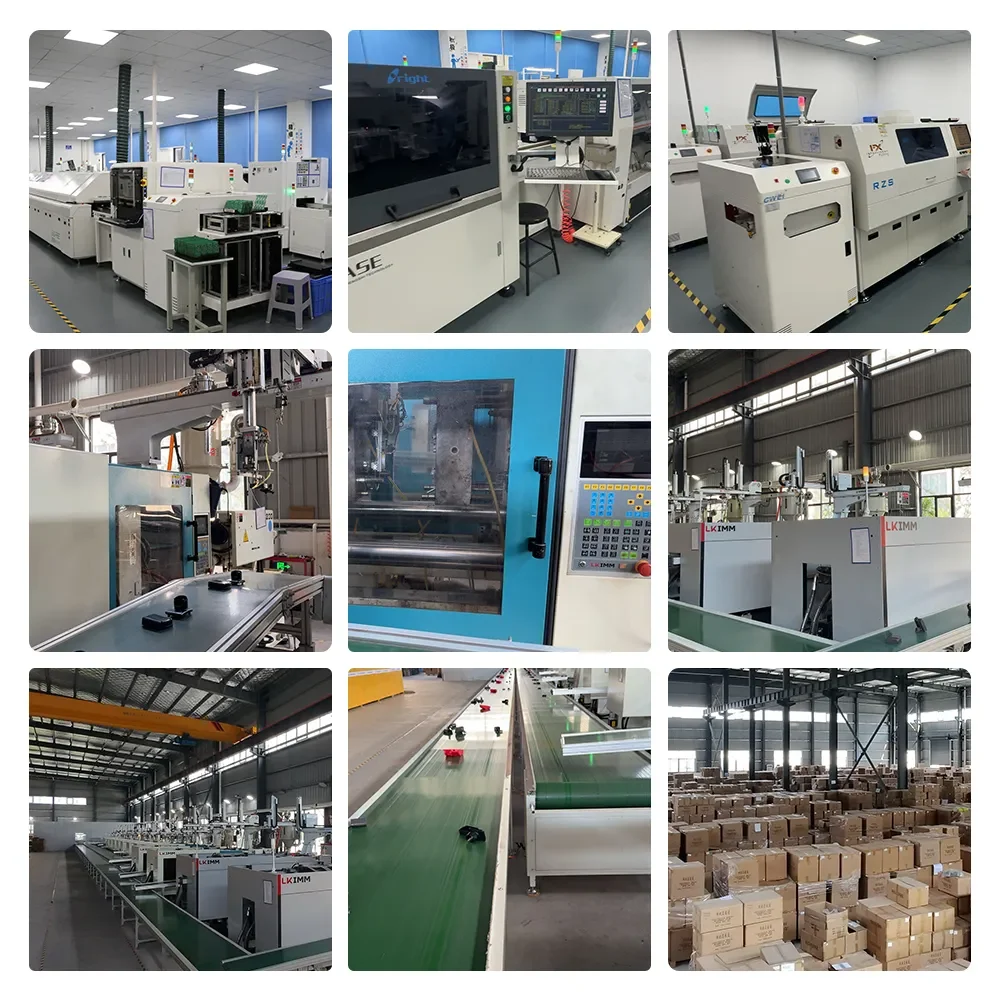
Intro — why XNJTG treats serviceability as a design requirement
For Makita-style replacement chargers, purchase price is only a small part of total ownership cost. In real deployments, long-term value is defined by whether chargers can be safely repaired, consistently supported with spare parts, and validated after service without behavioral drift.
At XNJTG, serviceability is treated as a design input, not an after-sales afterthought. Our charger platforms are planned from day one with a defined 3–5 year service window, ensuring spare continuity, controlled repair pathways, and predictable lifecycle cost for our customers.
Safety first — how XNJTG controls service and spare handling
All XNJTG charger service follows mandatory safety controls: complete de-energization, verified capacitor discharge, and isolation from mains supply. Power stages are treated as live until measured safe. ESD protection is enforced for all control boards, and thermally stressed units are screened for insulation degradation before any repair decision.
Chargers that fail initial safety screening are quarantined, tagged, and logged. No unit re-enters circulation without documented disposition, traceable technician records, and validated test results.
Serviceability goals & scope in XNJTG’s 3–5 year planning window
Each XNJTG charger platform is released with defined serviceability targets, including acceptable repair turnaround time, spare availability thresholds, and replenishment lead-time limits.
Scope includes all active Makita-style replacement charger SKUs we supply within the defined lifecycle window, including regional variants. Clear boundaries are established between field-repairable failures, depot-only repairs, and mandatory replacement conditions to avoid unsafe or uneconomical servicing.
What actually fails in Makita-style chargers — XNJTG field data perspective
Spare planning at XNJTG is driven by observed field failures, not theoretical BOM importance. Across Makita-style charger platforms, downtime is most often caused by thermal subsystems, connectors, cables, and airflow components rather than low-stress electronic parts.
Our internal RMA and service-return analysis continuously ranks components by failure frequency and service-blocking impact, ensuring that spare inventory reflects real-world behavior rather than assumptions.
Critical spare-parts groups supported by XNJTG
XNJTG maintains defined spare groups covering power electronics subject to thermal aging, airflow and cooling components whose degradation triggers secondary faults, high-wear connectors and cables, and limited control or sensing parts that can be replaced without firmware modification.
User-interface elements and standardized consumable kits are supported to enable cosmetic and functional restoration without unnecessary full-unit replacement.
How XNJTG stocks spares by part class
High-failure and service-blocking parts are stocked locally or regionally to minimize downtime. Medium-risk parts are buffered based on lead-time exposure, while low-failure core electronics are secured through supplier availability commitments rather than excess inventory.
Each part class has defined minimum levels, review intervals, and escalation thresholds tied to actual usage data.
Reorder logic & availability controls inside XNJTG
Reorder points are calculated from observed consumption, supplier lead times, and variability buffers—not fixed quantities. Safety stock absorbs demand spikes and logistics variance, while quarterly reviews adjust triggers using updated service data.
For long-lead or at-risk components, early-warning thresholds initiate alternate sourcing or controlled lifetime-buys well before shortages impact service.
Repair vs replacement — XNJTG’s decision rules
Repair is authorized only when safety integrity is intact, spare parts are available, and post-repair validation can fully reproduce expected charger behavior.
Replacement is mandatory for units showing insulation compromise, repeated power-stage failure, or unresolved root cause. Pattern failures trigger lot-level escalation rather than isolated repair, preventing systemic issues from re-entering the field.
XNJTG repair workflow, test fixtures & evidence capture
All serviced chargers follow a standardized workflow covering intake inspection, controlled disassembly, component replacement, reassembly, and verification.
Dedicated test fixtures validate electrical output stability, thermal behavior, and user-interface signaling under defined loads. Each repair generates structured test records capturing measurements, before-and-after states, and technician sign-off.
Obsolescence management & cross-qualification
Components approaching end-of-life are identified early. Electrical and mechanical alternates are pre-qualified to preserve footprint and behavior.
All substitutions are validated and documented in advance, avoiding reactive redesign when supply pressure emerges.
Supplier cooperation & contracting approach at XNJTG
XNJTG structures supplier agreements around spare availability commitments, maximum lead times, lifetime-buy options, and measurable performance indicators.
Cost structure of XNJTG spare & service programs
Service programs are evaluated across warranty coverage, paid spares, and extended support models. The objective is predictable cost with minimal downtime—avoiding both overstock and service disruption.
KPIs XNJTG tracks internally
Meaningful indicators include charger downtime, repair success rate, repeat-failure intervals, spare stockouts, and replenishment lead time. These metrics directly reflect service health rather than shipment volume.
Field service readiness & partner alignment
XNJTG defines clear authorization boundaries, safety limits, and documentation standards for service partners. Training and certification ensure repairs are consistent across regions and escalations occur before safety or reliability is compromised.
Lifecycle transition & end-of-service planning
End-of-service is planned in advance with final-order windows, spare run-down strategies, and migration guidance to successor charger models. Customers receive clear notice to align their own asset planning.
FAQ
Common questions focus on spare availability duration, lead-time commitments, firmware handling after repair, substitution approval, and the evidence delivered with serviced chargers.