
Resources
Blog

Beyond Assembly: A Transparent Walkthrough of Our High-Reliability PCBA Process for Power Solutions
High-reliability applications like battery management systems (BMS) and power tools demand precise, repeatable, and controlled PCBA (Printed Circuit Board Assembly) processes. This guide provides a complete, end-to-end view of our PCBA workflow—from bare PCB to fully tested and programmed modules—covering critical controls, reproducible checks, common defects, and troubleshooting.

Principles and Applications of PCB & PCBA Test Fixtures
Test fixtures are the mechanical and electrical interfaces that allow PCB/PCBA assemblies to be measured, exercised, and validated in production, R&D, and repair. A well-designed fixture converts a fragile board into a stable testable unit: it ensures repeatable electrical contact, protects the DUT (device under test), and routes signals safely to instruments or automated test software. This article explains fixture fundamentals, common types, design details, reproducible test flows, and how to diagnose fixture-induced failures.

SMT in PCBA Manufacturing: Process, Controls, and Best Practices
Surface Mount Technology (SMT) is the automated process that transforms a bare PCB into a fully functional PCBA. SMT includes solder paste printing, precise component placement, reflow soldering, inspection, and defect management. It is essential for high-density, high-yield, and reliable electronics, including BMS, power tools, and consumer devices.

Guard Your BMS: Ultimate Guide to ESD Protection in PCBA Assembly
A Battery Management System (BMS) PCBA integrates precision components—MOSFET arrays, high-accuracy sense resistors, gate drivers, protection ICs, MCUs, and analog front ends—designed to monitor and regulate lithium-ion battery packs. These devices operate at low voltage thresholds and contain semiconductor junctions only microns thick. Electrostatic discharge (ESD) introduces sudden, high-voltage, high-current pulses capable of damaging these structures instantly or causing latent defects that fail months later. In power-tool, e-bike, vacuum, and energy-storage battery production, rigorous ESD control directly determines pack safety, lifecycle, and failure rate.

PCB vs PCBA — Clear Definitions, Key Differences, and Use Cases
Understanding the difference between a PCB (bare board) and a PCBA (populated assembly) is critical for design, manufacturing, and troubleshooting. This guide explains what each is, their technical attributes, failure modes, DFM considerations, and when to order one versus the other.
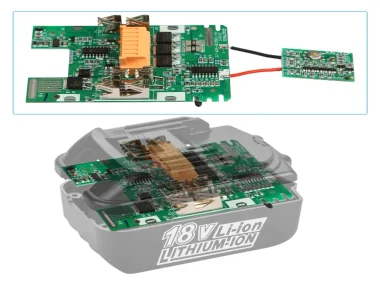
PCBA Manufacturing Process Technology
This article explains practical PCBA manufacturing technology from incoming-material checks through final testing on a standard SMT/assembly line. It focuses on measurable, repeatable floor-level controls that directly affect solder quality, placement accuracy, reflow stability, inspection predictability and reproducible diagnostics used by engineers and technicians on real production floors. The goal is to outline methods that work on factory equipment—not lab-only instrumentation.
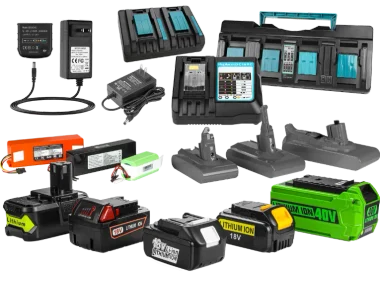
Connector Keying Differences Across Top Tool Brands
Mechanical connector keying and pin-sequencing strategies vary significantly across major power-tool brands, and these differences dictate orientation safety, signal-before-power behavior, insertion durability, and whether aftermarket packs or chargers operate reliably. This expanded guide details keying families, brand tendencies, structural tolerances, measurable QA methods, field inspection checklists, reproducible bench/lab tests, numeric acceptance gates, procurement wording, and CSV/report formats required for safe cross-brand compatibility validation.
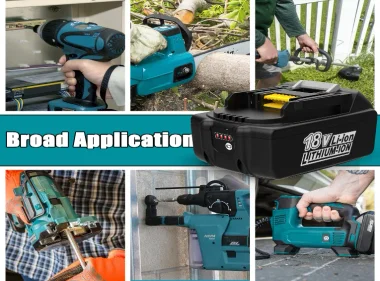
Not All Tool Are Equal: How Your Choice Cuts Makita Battery Life Short
Not all tools treat batteries equally. Drills, grinders, hammers, and demolition tools stress cells differently, driving uneven aging, internal resistance growth, and early cutouts. Fleet reliability and pack life depend on understanding these tool-specific stress profiles, allocating the right battery types, and enforcing logging, testing, and procurement practices to maximize cycle life.
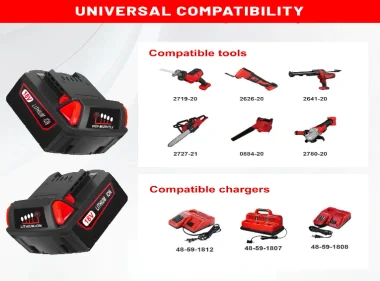
Milwaukee Pack Cell Imbalance: How It Grows, How to Measure & Slow It
Milwaukee pack lifetime is defined not by average cell health but by the weakest cell in the series string. As imbalance in voltage, capacity, and internal resistance grows—driven by aging, thermal gradients, load stress, and limited balancing—the weakest cell triggers premature cutouts, faster aging, and reduced runtime. Monitoring imbalance trends, enforcing strict procurement tests, and improving thermal/BMS design are key to extending pack life.
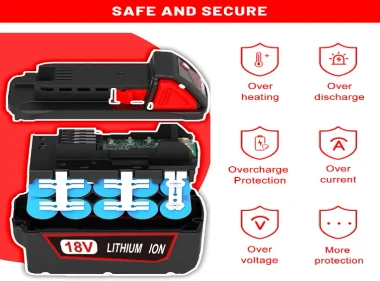
BMS & Firmware Behaviors in Milwaukee-Compatible Replacement Packs
Practical, non-marketing guide explaining how BMS logic, thermistor/ID signaling, and firmware handshakes determine Milwaukee compatibility, why mismatches create field failures, and which field, bench and procurement checks must be completed before deployment.
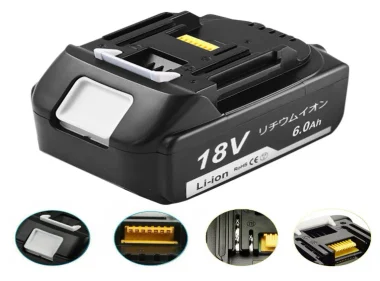
Makita Packs: Reverse-Polarity and Mechanical Keying — Design Notes
Explain the importance of mechanical keying and reverse-polarity protection in Makita-style packs, summarize common electrical and mechanical protection strategies, outline failure patterns, and provide reproducible inspection/testing workflows plus procurement acceptance requirements so designers, technicians, and buyers can verify safety and compatibility.
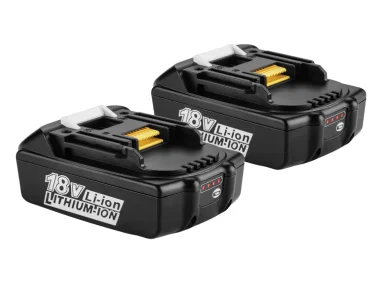
Makita BL Serie — Internal Resistance(DCIR) Trend and Fleet Management
Makita BL-series battery packs show DC internal resistance (DCIR) growth over time and cycles, influenced by temperature, SOC, and usage patterns. Monitoring DCIR predicts aging, prevents tool cutouts, and enforces vendor compliance. Use standardized field, bench, and lab protocols, maintain golden-unit baselines, and set clear retirement thresholds for safe fleet operation.
Let our battery power your success
Transform your path to success with our advanced battery technologies, while enjoying the perks of free technical guidance and tailored design services to meet your unique requirements.