
BMS Charging Failure: Snow Joe Battery Troubleshooting 2026
This B2B guide explains how the Battery Management System (BMS) can cause charging failure in Snow Joe battery systems. It covers BMS functions (voltage, temperature, protection), common charging lockout conditions (cold, hot, voltage, communication), why some third-party batteries charge while others fail, how to distinguish battery failure from compatibility failure, a practical isolation testing framework, and why voltage matching alone cannot guarantee compatibility. Essential for distributors, repair centers, and fleet operators.

📌 Key Takeaways
- BMS is often the hidden cause — temperature protection, communication faults, or platform mismatches can prevent charging.
- Charger compatibility ≠ physical fit. A battery may fit but fail charger recognition due to BMS logic mismatch.
- Voltage matching alone is insufficient. Platform architecture, BMS behavior, and communication logic must also match.
- Use isolation testing to determine if the issue is battery-related, charger-related, or compatibility-related before replacing parts.
🔋 What Does the BMS Monitor?
Many users assume a charger directly controls the charging process. In reality, modern lithium-ion batteries contain an internal Battery Management System (BMS) that continuously monitors battery health and safety conditions. The charger and BMS must work together before charging can begin.
Typical BMS functions include:
- Cell voltage monitoring
- Temperature monitoring
- Overcharge protection
- Over-discharge protection
- Overcurrent protection
- Short-circuit protection
🔒 Common BMS-Triggered Charging Lockouts
| Condition | Typical Result |
|---|---|
| Battery temperature too low | Charging denied |
| Battery temperature too high | Charging suspended |
| Cell voltage below protection threshold | Charging may not start |
| Internal fault detected | Charger rejects battery |
| Communication failure | Flashing error indicators |
🔧 Why Some Third-Party Batteries Charge Correctly While Others Do Not
Not all replacement batteries are engineered to the same standard. A battery may physically fit a Snow Joe charger while still failing charger recognition tests.
Key factors affecting compatibility:
- Cell configuration — the internal cell arrangement must match platform requirements
- Protection circuit design — the BMS must correctly support charging protection, temperature monitoring, and current control
- Charger recognition logic — the charger must correctly identify the battery before charging begins
- Manufacturing consistency — compatibility should remain consistent across production batches
Why quality varies:
| Factor | Quality Replacement Battery | Low-Cost Generic Battery |
|---|---|---|
| Cell Quality | Verified | Unknown |
| BMS Design | Validated | Variable |
| Charger Testing | Verified | Limited |
| Batch Consistency | Controlled | Uncertain |
This explains why some aftermarket batteries perform reliably while others experience charging failures.
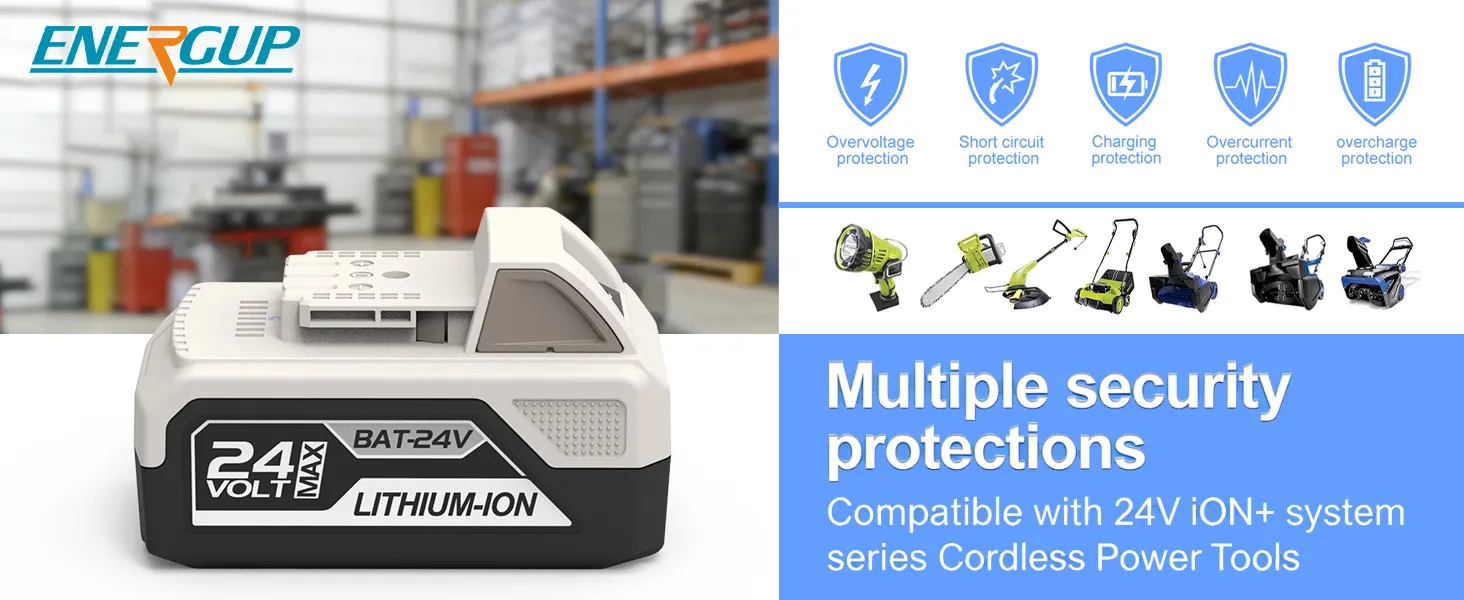
Replacement Snow Joe 24v 24vbat,ltx,lte,lt,xr Power Tool Battery For Snow Joe Power Tools
🔍 Battery Failure vs Compatibility Failure
One of the biggest troubleshooting mistakes is replacing a battery before confirming the actual source of the problem.
Signs of compatibility failure:
- Charger powers on normally
- Battery fits physically
- Charger refuses recognition
- Error indicators appear immediately
- Multiple batteries behave differently on the same charger
Signs of battery failure:
- Significant runtime loss
- Excessive heating
- Swelling
- Physical damage
- Persistent charging failure across multiple chargers
🧪 Simple Isolation Test
This practical diagnostic framework helps identify the root cause before replacing parts.
| Test Result | Likely Cause |
|---|---|
| Battery fails on multiple chargers | Battery problem |
| Multiple batteries fail on one charger | Charger problem |
| Original battery charges but replacement does not | Compatibility problem |
| Charging resumes after warming battery | Temperature protection |
⚡ Why Voltage Matching Alone Cannot Guarantee Charging Compatibility
Many users purchase replacement batteries by matching the voltage printed on the label. This approach often causes compatibility problems.
What determines compatibility beyond voltage? A battery system must also match battery architecture, connector design, BMS behavior, charger communication, and thermal protection logic.
Example: Two batteries may both display 24V:
| Feature | Battery A | Battery B |
|---|---|---|
| Voltage | 24V | 24V |
| Platform | IONMAX | Different Platform |
| Charger Compatibility | Compatible | Not Compatible |
❓ FAQ
Why does my battery charge on one charger but not another?
This typically indicates a charger compatibility issue or a BMS communication mismatch. Some chargers may have different firmware versions or protection thresholds.
Can a BMS lockout be reset?
Yes—in most cases, allowing the battery to return to normal temperature or briefly disconnecting it from the charger resets the protection. If charging still fails, the BMS may have detected a permanent fault.
Is a battery that fails charging always defective?
No. Many charging failures are caused by temperature protection, storage conditions, or compatibility mismatches—not battery defects. Use the isolation test above to confirm.
How do I know if a third-party battery has a compatible BMS?
Only through testing. Request charger compatibility test reports, thermal performance data, and batch validation records from the supplier before bulk purchase.
What is the safest approach to avoid BMS-related charging issues?
Source batteries from suppliers that validate BMS communication, charger recognition, and temperature sensing accuracy. Require documented test evidence—not marketing claims.
🎯 Conclusion
Conclusion: BMS is often the hidden cause of charging failures—temperature protection, communication faults, or platform mismatches can prevent charging even when the charger and battery appear physically compatible. Professional buyers should prioritize BMS validation (communication logic, temperature sensing accuracy, batch consistency) over voltage matching alone. The most reliable procurement decisions come from charger compatibility testing and documented BMS behavior.
For procurement teams, we recommend incorporating the isolation test framework and compatibility indicators above into your standard battery evaluation process.