
Resources
Blog

Makita Battery Compatibility — Guide for BL & LXT 18V Tool
Procurement-focused Makita battery-compatibility brief for fleets: mandatory safety controls (PPE, isolated test area, VOC/temperature monitoring), platform mapping (CXT/LXT/XGT), STAR handshake/firmware risk, reproducible test records (capacity, IR, handshake hash, thermal series), field triage checklist, and B2B acceptance criteria—verify BMS/firmware, batch traceability, and pilot runs to minimize downtime and warranty exposure.

Makita Battery Life: How Long Do They Last
Makita batteries last 2–5 years (300–500 cycles), with 20–60 min runtime per charge depending on tool load and capacity. Lifespan is driven by heat, deep discharge, and high current use—not voltage (12V vs 18V similar). Capacity fades due to internal resistance growth and cell aging. Extend life with 20–80% charge range and temperature control. Replace below 80% capacity. For B2B, prioritize validated cycle life, BMS reliability, and batch consistency.

How Long Does a Makita 18V Battery Last?
Makita 18V batteries typically last 2–5 years (300–500 cycles), with lifespan affected by charging habits, temperature, and workload. Heat, deep discharge, and high-drain tools accelerate degradation, while proper storage (40–60% charge, 10–25°C) and correct chargers extend life. Runtime varies by tool load (≈20–30 mins continuous). Replace when capacity drops below 80% or charging becomes unstable. For B2B buyers, prioritize verified cycle life, BMS stability, and batch consistency.

DeWalt Battery Problems — Common Failures, Root Causes & Supplier-Level Solutions
A practical breakdown of the most common DeWalt battery problems, why they occur in fleet environments, how to diagnose them quickly, and what professional buyers should demand from replacement battery suppliers to avoid recurring failures.

Milwaukee Battery Types Explained: CP vs XC vs HO vs FORGE — A Supplier’s Technical Guide
A procurement-focused technical guide from XNJTG, explaining the real engineering differences between Milwaukee M18 battery types — CP, XC, HO, and FORGE — and how buyers evaluate performance, compatibility, lifecycle cost, and reliable aftermarket alternatives.

Milwaukee Battery Troubleshooting: 7 Common Problems and Practical Solutions
This guide diagnoses seven common Milwaukee battery faults (won’t charge; red LEDs; capacity loss; overheating; tool cut-outs; swelling; dead after storage), links them to BMS/thermistor/charger issues, rising internal resistance, poor contacts or thermal stress, and prescribes field triage (clean contacts, swap charger, rest/cool, measure OCV/sag), bench traces/thermal checks, and replace-if: <80% capacity, repeated protection trips, or swelling. For fleets, consider validated replacement packs from XNJTG.

XNJTG Strategic Outlook: The Next Generation of Cordless Power Through 2030
A supplier-grade, audit-ready framework from XNJTG outlining the future of power tool batteries and chargers through 2030, combining advanced cell chemistries, smart BMS evolution, ultra-fast charging, and validation processes for professional B2B adoption and lifecycle management.

XNJTG’s B2B Guide to Recognizing and Preventing Overcharge in Makita-Style 18V Lithium Batteries
A supplier-grade technical guide from XNJTG explaining how overcharge manifests in Makita-style lithium-ion packs, the systemic reasons behind it, and how XNJTG designs, validates, and documents prevention and evidence for warranty and service decisions.

XNJTG’s 3–5 Year Spare-Parts Strategy for Makita-Style Chargers
A supplier-side explanation of how XNJTG plans, stocks, and validates spare parts for Makita-style replacement chargers over a 3–5 year lifecycle, covering failure-driven part prioritization, inventory logic, repair boundaries, firmware continuity, and audit-ready service evidence.
Technical Escrow for Charger Firmware: How XNJTG Reduces Long-Term Lock-In Risk for Replacement Chargers
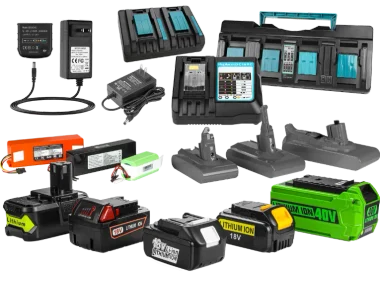
An XNJTG supplier-grade explanation of why firmware dependency makes modern replacement chargers a long-term risk point, how technical escrow is implemented inside our charger programs, what behavioral assets we actually preserve, and how this approach protects buyers from continuity failures without exposing proprietary IP.

Why Some DeWalt Chargers Exhibit Elevated Temperatures During Back-to-Back Charge Cycles
This article explains how we, as a supplier of DeWalt-compatible chargers, evaluate elevated temperature behavior observed during consecutive charging cycles. The focus is on thermal accumulation, control response, and duty-cycle alignment as verified in supplier-side validation, rather than on end-user operation or informal troubleshooting. All observations discussed here are derived from internal testing, lot validation, and RMA analysis workflows.

Diagnosing DeWalt-Style Chargers That Fail to Recognize 20V Battery Packs
This article explains how we, as a manufacturer and supplier of DeWalt-compatible replacement batteries and chargers, evaluate and document cases where a DeWalt-style charger does not recognize a 20V battery at insertion. The focus is not end-user troubleshooting, but how recognition behavior is classified, verified, and controlled during our own product validation, lot release, and RMA analysis, ensuring consistent compatibility before products reach procurement or deployment.
Let our battery power your success
Transform your path to success with our advanced battery technologies, while enjoying the perks of free technical guidance and tailored design services to meet your unique requirements.