
Resources
Blog

How does a DeWalt pack’s internal resistance evolve after ~500 cycles — and what should B2B buyers test for?
After roughly 500 cycles, many DeWalt-style lithium-ion packs still pass nominal capacity checks, yet a growing share already suffer from elevated internal resistance (IR). This hidden shift constrains peak power, increases heat generation, and triggers early low-voltage cut-off, making IR—not remaining capacity—the dominant driver of mid-life performance complaints and warranty exposure.

DeWalt Pack Repairability — When to Replace Cells vs Replace the Pack
This guide helps determine whether a failed DeWalt battery pack deserves diagnostic effort or should move directly to replacement. In most real-world cases, replacing the entire pack is safer, more reliable, and more economical than rebuilding it at the cell level. Cell replacement only makes sense when failure is isolated, measurable, and the BMS and mechanical structure are clearly healthy. The sections below explain how to make that call using evidence rather than guesswork.

Best Practices for Packing & Shipping DeWalt Replacement Batteries
Most DeWalt replacement battery shipments fail before reaching customers due to preventable compliance errors rather than cell defects, including UN misclassification, incorrect SOC control, inadequate UN-certified packaging, labeling or documentation mismatches, and use of unapproved carriers. These violations trigger airline rejection, customs seizure, platform penalties, insurance denial, and carrier blacklisting, making disciplined dangerous-goods compliance essential for reliable battery export.

Cell Imbalance Signs in DeWalt Packs — How to Detect Early
Cell imbalance is one of the most common and least visible failure modes in DeWalt lithium-ion packs. Long before a pack “dies,” imbalance produces electrical, thermal, and behavioral signals that can be detected with basic measurements—if you know what to look for.

Why Some DeWalt Tools Reject Third-Party Packs — Handshake Protocols, Voltage Tolerances & Engineering-Grade Compatibility
When a DeWalt tool refuses to power on with a third-party battery, the behavior is almost never accidental. In most cases, the tool is executing deliberate electrical, thermal, or firmware-level validation logic. This article explains how that rejection is triggered and what true compatibility actually requires at the system level.

DeWalt XR Packs That Cut Out Under Load: Root-Cause Mapping & Engineering-Grade Solutions
When a DeWalt XR battery cuts out under heavy load, it is almost never random failure. In the vast majority of cases, the pack is executing deliberate protection logic in response to electrical or thermal stress. This guide replaces trial-and-error with a clear root-cause map and engineering-grade decision paths.

Dewalt 20V Max Battery Won’t Charge? What’s Actually Blocking the Charge—and What to Do Next
When a DeWalt 20V Max battery refuses to charge, it is most often an intentional protective lockout by the pack’s BMS (undervoltage, cell imbalance, thermal or handshake fault) or a charger/interface/contact issue — not sudden catastrophic cell failure. Check terminals and seating, feel pack temperature, cross-test with a known-good charger and a known-good pack, and let a hot/cold pack rest 20–30 minutes; measure OCV before further steps. Persistent refusal after these checks usually indicates BMS/PCBA or weak-series-group problems that need diagnostic logs or lab-level intervention — replacing cells alone commonly fails unless the BMS and balancing are addressed.
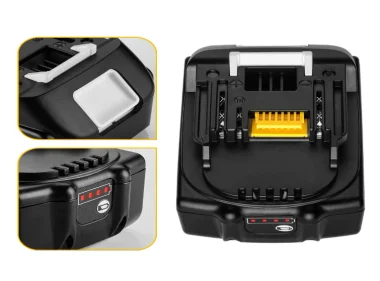
Charging Algorithm Overview — How Makita Charger Optimize Battery Life
Charging algorithms are the firmware and control logic that turn a power supply into a safe, effective charger. For Makita-style Li-ion tool packs the algorithm must balance three goals: safely restore energy (speed), avoid actions that accelerate aging (longevity), and reliably handle protection/BMS handshakes. This note explains the common algorithm building blocks (precondition/wake, CC–CV, taper/termination, thermal compensation, balancing and adaptive aging logic), how they protect cells, and which tests you can run to verify correct behavior.
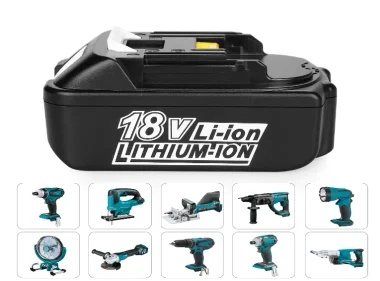
Preventing Charger-Induced Stress on Makita BL-Series Batteries
Chargers can be a primary cause of premature battery aging or failure when their hardware, firmware, or use patterns induce excess voltage, current, heat, or ripple into BL-series packs. This guide explains how chargers stress BL packs, practical preventive design/operational controls, reproducible tests (field → bench → lab) to detect charger-driven damage, and clear troubleshooting/mitigation steps you can apply immediately. Technical, non-marketing, and suitable for engineering, QA and fleet operations.
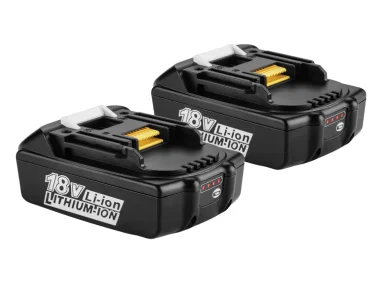
Temperature Sensing Placement in Makita Chargers — Why It Matters
Accurate temperature sensing determines whether a charger can safely fast-charge or must derate/stop. Sensor location, thermal coupling and control logic directly affect detection latency, false trips and charger/pack lifetime. This guide gives practical placement rules, sensor choices, mounting best practices, control strategies, reproducible tests, common failures and immediate engineering actions — concise, technical and shop-floor ready.

Safety Mechanisms in Makita Charger PCBAs — Thermal & Electrical Protections
Modern Makita-style chargers embed multiple thermal and electrical safety mechanisms on the PCBA to protect cells, users and the charger itself. These include temperature sensing and thermal cutbacks, overcurrent/current-limit, overvoltage/OVP clamps, reverse-polarity detection, input surge protection, NTC/thermistor handshakes with packs, watchdogs and hardware failsafes (fuses/TVS/crowbar). This note explains each mechanism, how it behaves, reproducible tests you can run now, bench forensic methods, common failure modes and practical mitigations.
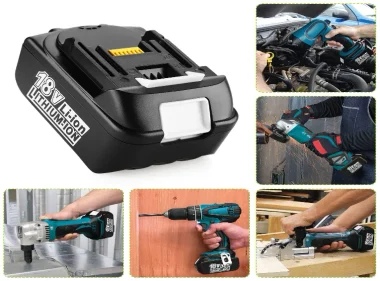
How Temperature Affects Makita BL Packs in Continuous Operation
This article explains how temperature becomes the primary limiting factor for Makita BL-series 18V batteries during continuous-duty operation, where sustained current prevents cooling and causes heat to accumulate in cells, busbars, and BMS components. Rising temperature alters electrical behavior: DCIR increases beyond the optimal range, voltage sag worsens, weak cell groups hit undervoltage earlier, and BMS thermal protection triggers abrupt shutdowns, forming a heat–DCIR–sag positive feedback loop that also accelerates long-term degradation. The guide outlines safe, reproducible field and bench diagnostics—OCV checks, controlled continuous tasks, IR thermal mapping, and pulse DCIR tests—to distinguish pack limits from tool issues. It details why high-load tools and hot environments are worst case, how repeated overheating shortens service life, and provides practical mitigation strategies, including using higher-Ah packs, enforcing rest/rotation policies, improving contacts and cooling, and validating designs with thermal mapping and long-duration tests rather than relying on intermittent-use assumptions.
Let our battery power your success
Transform your path to success with our advanced battery technologies, while enjoying the perks of free technical guidance and tailored design services to meet your unique requirements.